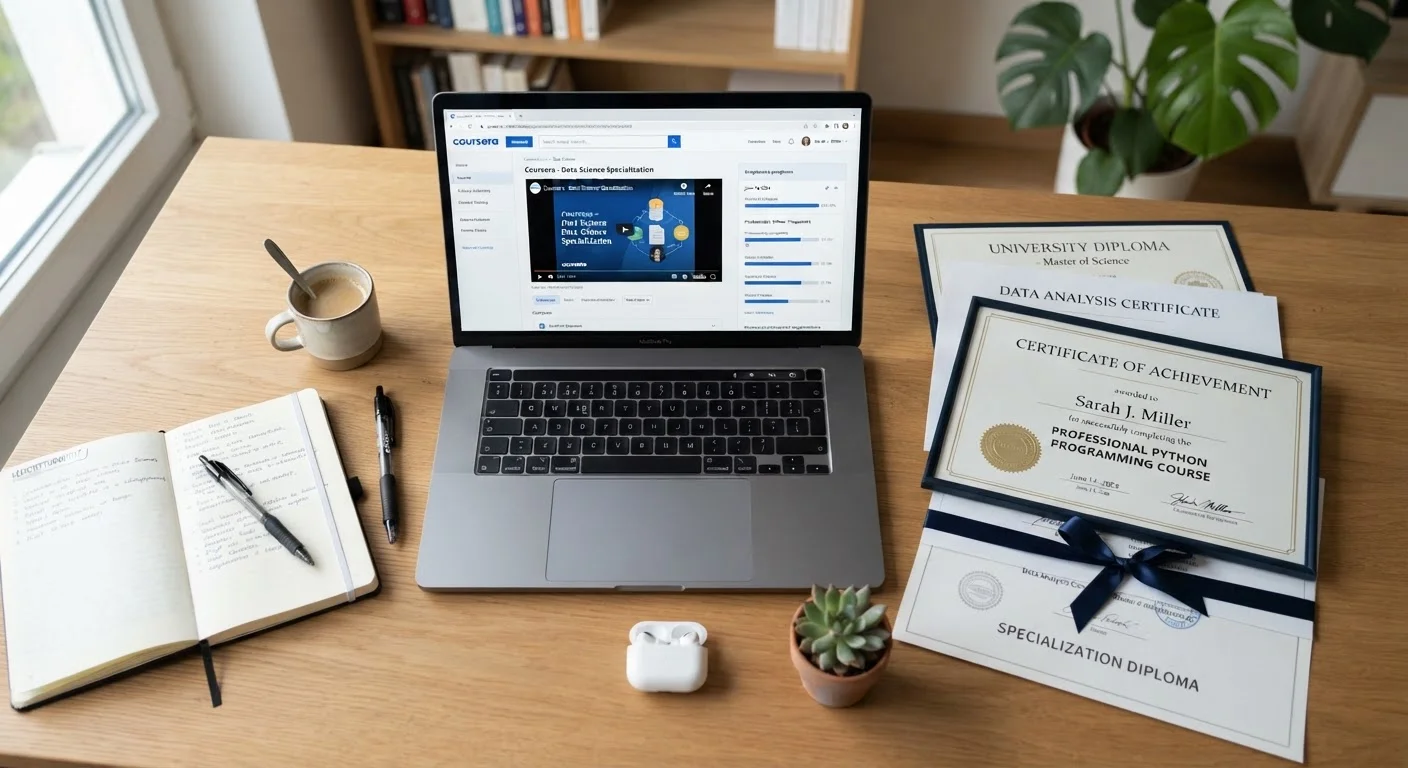
Use this checklist to evaluate whether an online course genuinely fits your goals, schedule, and learning style before committing your time or money.
Key Takeaways
Clarifying your specific goal before enrolling prevents wasted time and money on mismatched courses.
Checking whether a course fits your actual weekly schedule is as important as evaluating its content.
Course format, pacing, and instructor accessibility affect completion rates significantly.
Hidden costs such as graded assignments, certificates, or software access can add up quickly.
Verifying credential value with your employer or industry beforehand protects your investment.
Why this checklist matters
Online course enrollment is easy. Finishing a course that actually moves your career forward is harder. The gap between those two outcomes often comes down to decisions made in the ten minutes before clicking 'Enroll' rather than anything that happens afterward.
Dropout rates in online learning are high, and many of the causes are predictable: the course does not match the learner's schedule, the credential carries no weight with employers, or the format does not suit how the person actually learns. Most of these mismatches are avoidable with a structured pre-enrollment review.
This checklist covers the questions worth answering before you commit time or money. Work through it for any course you are seriously considering, whether free or paid. For a deeper look at assessing course quality and instructor credibility, see evaluating an online course before you enroll. The online learning hub also offers broader guidance on building a self-directed education strategy.
Clarify your goal
Write down the specific skill or credential you want to gain from this course, in one or two sentences.Must
Confirm the course content directly addresses that goal by reading the full syllabus or module list.Must
Identify how you will use this skill within six to twelve months of completing the course.Should
Schedule and time commitment
Find the total estimated study hours and divide them across the weeks you have available to confirm the workload is realistic.Must
Check whether the course has fixed deadlines or is fully self-paced, and match that to your current schedule.Must
Block the required study time in your calendar for at least the first two weeks before enrolling.Should
Identify any upcoming work, family, or life events in the next three months that could disrupt your study schedule.Should
Learning format and fit
Confirm the primary format: video lectures, reading-based, live sessions, or project-based work.Must
Watch or read any free preview content to assess whether the instruction style holds your attention.Must
Check whether the course includes interactive elements such as quizzes, peer review, or discussion forums.Should
Verify that required software, tools, or platforms are accessible on your devices without additional cost.Must
Costs and financial considerations
Identify the full cost including any fees for graded assignments, certificates, or supplementary materials that are not included in the base price.Must
Check whether your employer offers tuition assistance or professional development reimbursement that covers this course.Should
Review the refund or cancellation policy before entering payment details.Must
Confirm whether a free audit option is available so you can assess the course before paying for a certificate.Nice to have
Credential and career value
Research whether the certificate or credential is recognized by employers in your target field by checking job postings for that skill.Must
Confirm whether the issuing institution or platform is accredited if you plan to use the credential toward a degree or professional license.Must
Ask your manager or a recruiter in your field whether they value this specific certificate before you pay for it.Should
Support and completion likelihood
Check whether the course provides instructor feedback, a teaching assistant, or a community forum for questions.Should
Read recent learner reviews to look for patterns in complaints about content quality or lack of support.Should
Identify one person in your life who can hold you accountable to completing the course.Nice to have
How to use this checklist
Run through each group in order. Some items take seconds; others, like verifying employer tuition reimbursement policies, may take a day or two. Do not skip the financial section. Free courses can carry real costs in time, and paid courses sometimes include fees that are not visible on the main enrollment page.
Audit options do not always include grading
Many platforms allow free auditing of course videos and readings, but graded assignments and the final certificate typically require a paid upgrade. If earning a verifiable credential is your goal, confirm exactly what the free tier includes before investing significant time in audit mode.
If your goal involves building savings to fund further education, the saving and emergency funds hub has practical frameworks for setting aside money without disrupting your monthly budget.
One last note: this checklist is a decision-support tool, not a guarantee of outcomes. Learning results depend on effort, consistency, and circumstances that vary by person. Use this as a starting point, not a contract.
Learning & Education Editorial Team is the collective byline for our editorial team and contributor network. Articles published under this byline or an editorial pen name are researched, written, and reviewed according to our editorial standards for clarity, consistency, and independence before publication.
The content provided on our blog site traverses numerous categories, offering readers valuable and practical information. Readers can use the editorial team’s research and data to gain more insights into their topics of interest. However, they are requested not to treat the articles as conclusive. The website team cannot be held responsible for differences in data or inaccuracies found across other platforms. Please also note that the site might also miss out on various schemes and offers available that the readers may find more beneficial than the ones we cover.