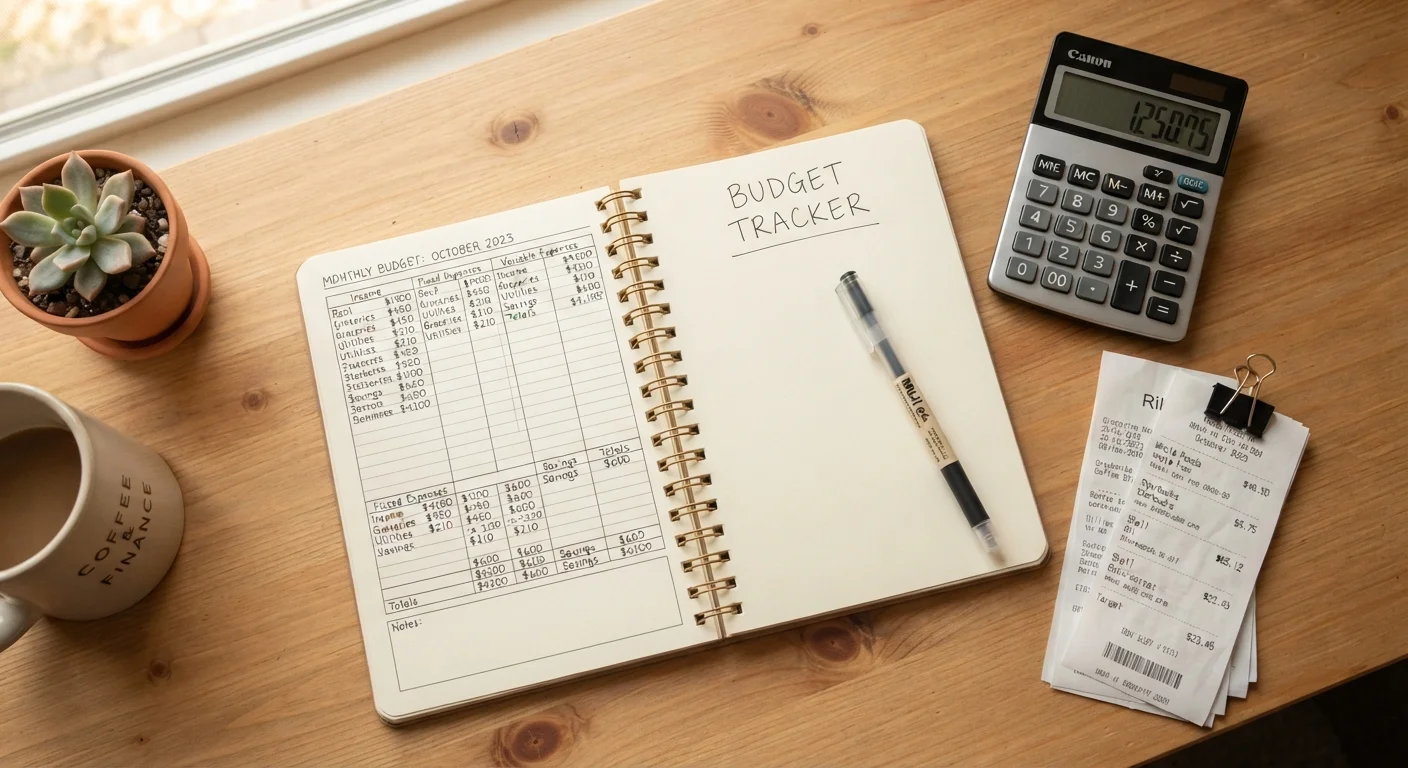


Why a written budget changes your financial picture
Most people have a rough mental estimate of what they spend each month. That estimate is almost always wrong, usually on the low side. Writing numbers down forces a confrontation with reality: the recurring subscriptions you forgot, the gas spending that fluctuates, the irregular expenses that arrive every few months and blow the plan.
A written budget does not restrict your spending automatically. What it does is show you exactly what trade-offs you are already making, so you can decide whether those trade-offs match your actual priorities. That visibility is where the value comes from.
If your budget has fallen apart before, the problem is rarely willpower. Common planning gaps are more often to blame than lack of discipline. This guide builds the habits that prevent those gaps from the start.
What you will need
Six steps to build your first monthly budget
Work through these steps in order. Each one builds on the last, so skipping ahead tends to produce numbers that do not hold up.
Calculate your real monthly take-home income
Write down every source of income you actually receive after taxes and deductions: wages, freelance payments, side income, and any regular transfers. Use the amount that lands in your account, not your gross salary or contract rate.
If your income arrives bi-weekly, multiply one paycheck by 26 and divide by 12 to get a monthly figure. For irregular income, use the lowest month from the past six months as your baseline. Building the budget on a floor rather than an average protects you when a slow month hits.
List every fixed expense
Fixed expenses are the bills whose dollar amount does not change month to month: rent or mortgage, car payment, minimum loan payments, insurance premiums, and any subscription billed at a flat rate. Pull your last two or three bank and credit card statements to make sure the list is complete.
Write the amount and the due date for each. Total them. This is the floor your income must clear before any other spending is possible.
Estimate your variable expenses honestly
Variable expenses shift each month: groceries, gas, dining out, clothing, entertainment, and personal care. Go back through three months of statements and calculate an average for each category. Gut-feel estimates here are almost always lower than the real numbers.
Add a separate line for irregular expenses, the costs that do not appear every month but come up every year: car registration, annual subscriptions, holiday gifts, medical copays, and home maintenance. Divide the annual total by 12 and treat that amount as a monthly expense. Skipping this step is one of the most common reasons budgets collapse in months three or four.
Assign money to savings before spending what remains
Savings works better as a fixed line item than as whatever is left over at month end. Decide on a specific dollar amount to transfer to savings on payday, even if that amount is small. Automating the transfer removes the decision from each pay cycle.
If you do not yet have a dedicated savings buffer, starting an emergency fund on a limited income is more manageable than it sounds. The Saving and Emergency Funds hub covers a range of approaches for different income levels.
Balance income against total spending
Add up fixed expenses, variable expense averages, the irregular-expense monthly set-aside, and your savings line. Subtract the total from your take-home income.
If the result is positive, you have room to increase savings, pay down debt faster, or build a small buffer for budget variance. If the result is negative, you are spending more than you earn and need to find cuts. Start with variable categories where real choices exist, not with the savings line, which is the last place to reduce.
For a more structured approach to allocating every remaining dollar, zero-based budgeting takes this step further by assigning a purpose to every dollar before the month begins.
Track actual spending and compare it weekly
A budget written once and never checked is just a wish list. Set a recurring 15-minute appointment each week to compare what you actually spent against what you planned. Most banks and credit unions offer transaction downloads; a simple spreadsheet works just as well.
When a category runs over, look at why before adjusting the budget. Sometimes the number was too low to begin with. Sometimes spending genuinely needs to come down. Knowing which problem you have determines the right fix.
Once your budget is running, a monthly budget audit helps you catch small leaks before they grow. If your income varies from month to month, the strategies in budgeting with irregular pay adapt this framework to an unpredictable paycheck.
This article is for general informational purposes only and does not constitute personalized financial advice. Consult a qualified financial professional for guidance specific to your circumstances.