

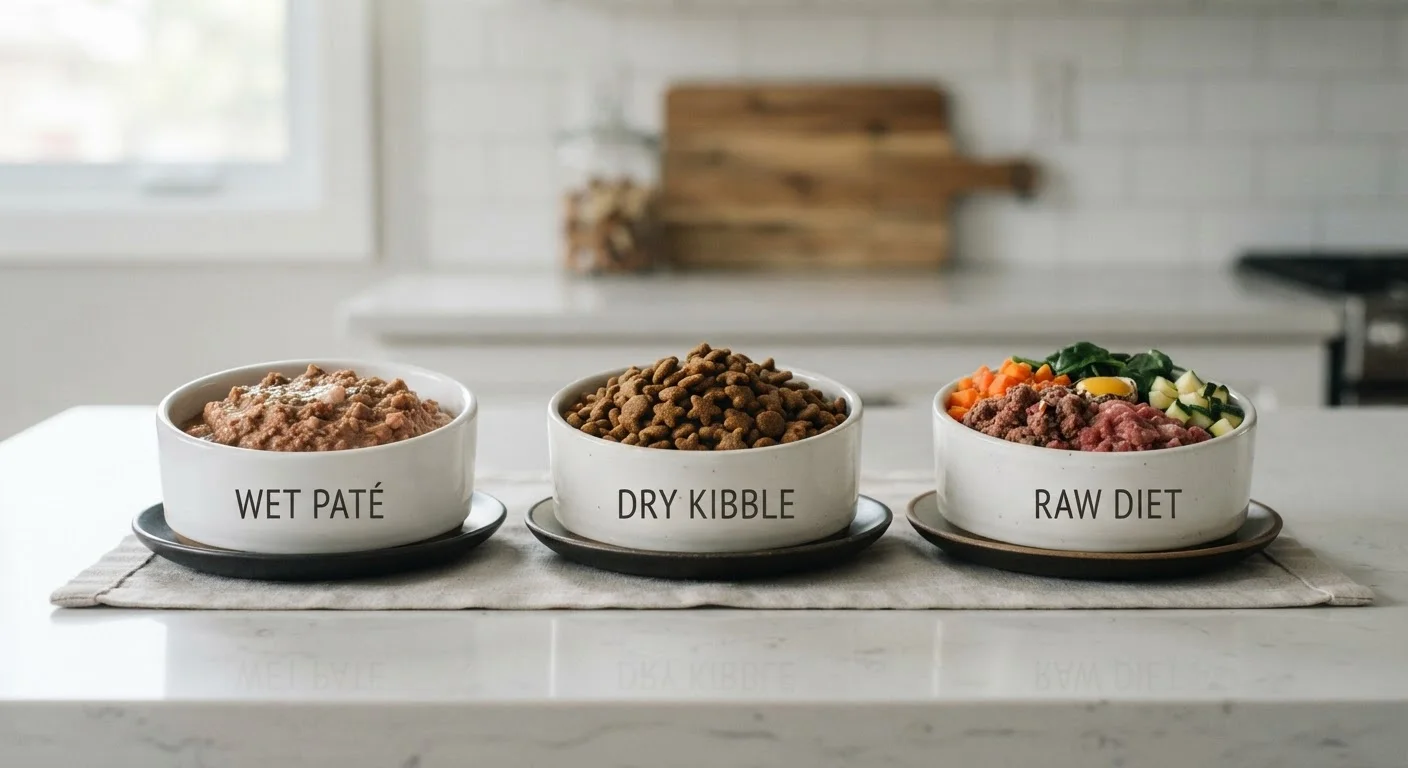
Why the choice of food format matters more than most owners expect
Cats are obligate carnivores, meaning their bodies depend on nutrients found only in animal tissue. Unlike dogs or humans, cats have limited ability to synthesize certain amino acids and vitamins on their own, so the food format is not just about preference; it shapes how well those nutrients are delivered. Beyond protein, the biggest variable is water. Cats evolved in arid environments and developed a low thirst drive, relying on prey moisture to meet most of their fluid needs. A domestic cat eating exclusively dry food may be in a state of mild, chronic dehydration without any obvious symptoms. That background fact is worth holding onto as you compare formats.
For more on how common beliefs around feline nutrition can mislead owners, see our guide to cat nutrition myths that veterinarians consistently encounter.
Wet food: hydration and protein in one bowl
Canned or pouch wet food is typically 70 to 80 percent water by weight, which closely mirrors the moisture content of whole prey. That water counts toward a cat's daily intake in a way that a separate water bowl often does not, because many cats drink minimally even when fresh water is available. For cats with a history of urinary crystals, lower urinary tract disease, or early kidney disease, veterinarians frequently recommend wet food as a dietary baseline for this reason.
Wet food also tends to be higher in animal protein and lower in carbohydrates than dry food. Cats have limited capacity to regulate glucose from high-carb meals, and a diet based primarily on digestible animal protein is more consistent with their metabolic design. The downsides are practical: opened cans spoil within a few hours at room temperature, cost per calorie is higher than kibble, and some cats develop a preference for a specific texture and resist variety.
Check the AAFCO statement before buying
Any commercially prepared cat food, wet or dry, should carry an AAFCO (Association of American Feed Control Officials) statement confirming the product is complete and balanced for your cat's life stage. Look for wording such as 'formulated to meet the nutritional levels established by AAFCO' or 'feeding trials.' A food without this statement may not meet minimum nutrient requirements.
Dry food: convenience with trade-offs to manage
Kibble is energy-dense, shelf-stable, and easy to portion. For multi-cat households or owners who travel, those are real advantages. Dry food also works reasonably well in puzzle feeders, which can slow eating and provide mental engagement.
The nutritional concerns with dry food center on moisture and carbohydrate content. Most kibble sits between 6 and 10 percent moisture. Cats eating only dry food generally drink more from a bowl than those eating wet food, but research published in veterinary nutrition literature suggests the combined intake rarely matches what wet-fed cats receive. Some formulations also use plant-based starches as binders, raising the carbohydrate level above what a cat's metabolism handles efficiently over years.
Dry food is not inherently harmful, and many cats live long, healthy lives on it. The key is monitoring water intake and using a water fountain or multiple bowls to encourage drinking. Owners of cats with any urinary or kidney history should discuss dry-only feeding specifically with their veterinarian.
| Wet food | Dry food | Raw diet | |
|---|---|---|---|
| Moisture content | 70 to 80 percent | 6 to 10 percent | 65 to 75 percent (varies) |
| Protein level | High, animal-based | Moderate, varies by formula | High, if correctly balanced |
| Carbohydrate content | Low to moderate | Moderate to high | Low |
| Food safety risk | Low (commercial) | Low (commercial) | Higher (pathogens) |
| Shelf life after opening | Hours at room temperature | Weeks to months | Hours (must refrigerate) |
| Cost per day | Moderate to high | Low to moderate | Moderate to high |
| Nutritional completeness | Reliable if AAFCO-compliant | Reliable if AAFCO-compliant | Requires careful formulation |
Raw diets: what the appeal is, and where the risk lies
Raw feeding, which generally means uncooked muscle meat, organ meat, and sometimes bone, appeals to owners who want to mimic a cat's ancestral diet as closely as possible. The argument is that cooking denatures some proteins and destroys heat-sensitive nutrients, so a raw diet preserves those in their natural state.
The food-safety concern is real and documented. Raw meat can carry Salmonella, Listeria, E. coli, and Toxoplasma. The American Veterinary Medical Association and several major veterinary organizations have noted that raw diets pose risks not just to cats but to humans in the household, including children, elderly adults, and immunocompromised individuals who contact contaminated surfaces, bowls, or cat feces. Some cats also shed pathogens after consuming contaminated raw meat without appearing sick themselves.
Beyond safety, nutritional completeness is a genuine challenge. A raw diet assembled at home from grocery-store meat without careful formulation is very likely to have calcium, phosphorus, taurine, or vitamin imbalances that cause serious deficiency over months or years. Commercial raw formulas vary in how thoroughly they have been tested. Anyone considering this route should work directly with a board-certified veterinary nutritionist to design or evaluate the specific diet, not rely on general online frameworks. If you feed a dog as well and are thinking about raw options for them too, our guide on dog feeding approaches covers similar considerations from that species' perspective.
How to think about what works for your cat
Age, health history, and individual preference all shape the practical answer. Kittens need calorie-dense food with specific amino acid ratios for growth. Senior cats often benefit from high-quality protein and wet food to support kidney function. Cats with dental disease may find hard kibble painful, while cats with gastrointestinal sensitivities may not tolerate certain protein sources regardless of format.
Before changing a cat's diet, especially to address a health concern, a veterinary exam is worth scheduling. Conditions such as kidney disease, hyperthyroidism, and diabetes each respond differently to dietary changes, and feeding the wrong macro profile can genuinely worsen some of those conditions. Your setup guide for new cat owners also covers the broader environmental context, including feeding station placement, that influences whether a cat eats consistently.
Gradual transitions matter too. Switching formats abruptly often triggers refusal or digestive upset. Mixing increasing proportions of the new food over seven to ten days tends to go more smoothly.
This article is for general informational purposes only and is not a substitute for personalized veterinary advice. Consult a licensed veterinarian before making significant changes to your cat's diet, especially if your cat has an existing health condition.