
How each method works in the dog's brain
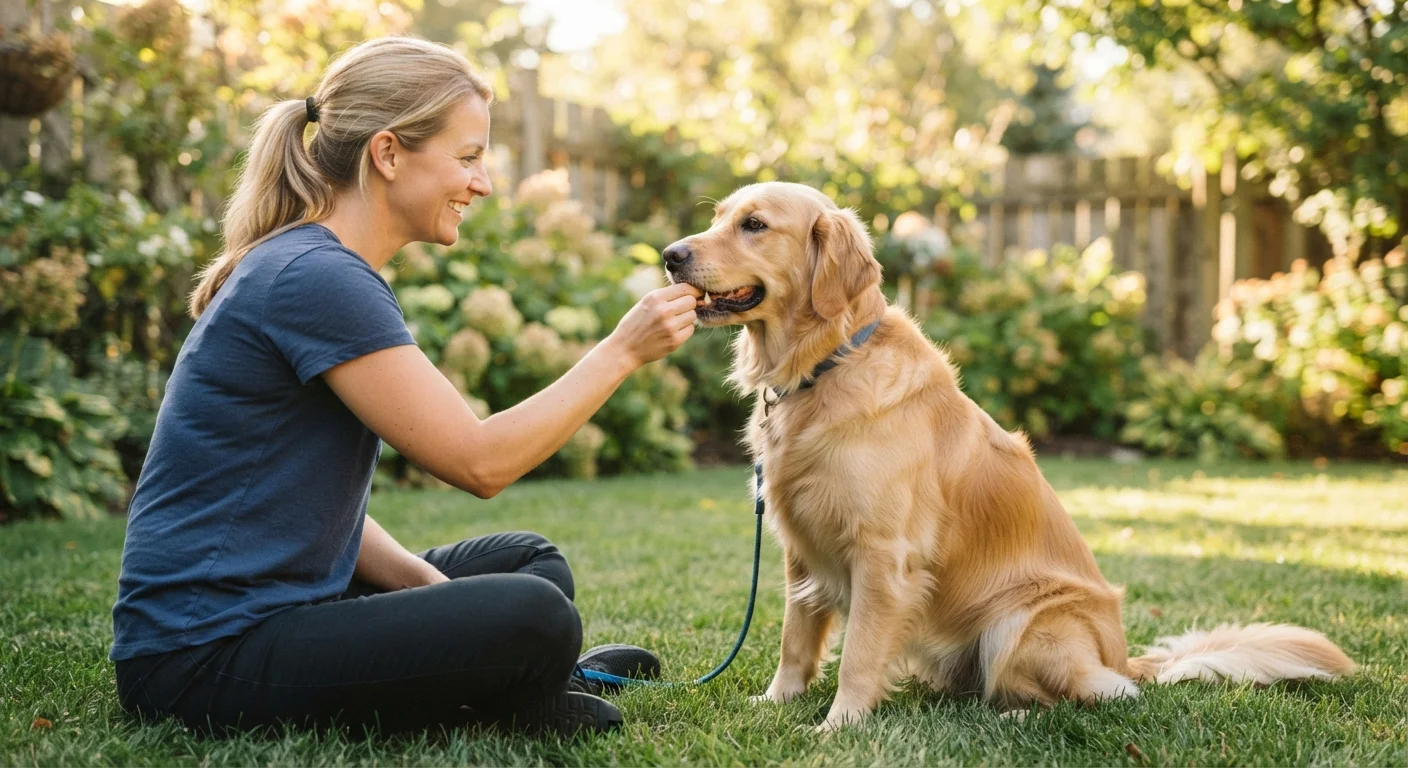
Positive reinforcement adds something the dog wants (a treat, praise, play) immediately after a desired behavior occurs. The dog's brain links the action to the reward, making that action more likely to happen again. The mechanism is operant conditioning, and it is well-documented in behavioral science.
Punishment, in the training context, means adding something unpleasant or removing something pleasant to reduce a behavior. A leash correction, a verbal reprimand, or a shock from an electronic collar all fall into this category. The dog learns to stop a behavior to avoid discomfort, but it does not automatically learn what to do instead.
That gap is where punishment-based training most often fails. A dog that stops jumping when corrected has not learned to sit when greeting people. Without an alternative behavior reinforced in its place, the dog is left to guess, which leads to inconsistent results and frustrated owners.
| Criterion | Positive reinforcement | Punishment-based training |
|---|---|---|
| Core mechanism | Adds a reward after desired behavior | Adds discomfort to reduce unwanted behavior |
| Teaches an alternative behavior | Yes, by definition | No, only suppresses current behavior |
| Risk of fear or anxiety | Low when applied correctly | Documented risk, especially in sensitive dogs |
| Effect on dog-owner bond | Generally strengthens trust | Can erode trust over time |
| Vet and behaviorist consensus | Broadly supported by AVSAB and ACVB | Broadly discouraged by major behavior bodies |
| Works without tools present | Yes, behavior generalizes to new contexts | Often tool-dependent; behavior may drop off |
| Suitable for fearful or reactive dogs | Yes, with proper counter-conditioning | High risk of worsening fear-based behavior |
What the research and veterinary guidance say
The American Veterinary Society of Animal Behavior (AVSAB) has published position statements advising against punishment-based training, citing evidence that aversive methods can increase aggression, cause fear and anxiety, and damage the dog-owner relationship. The American College of Veterinary Behaviorists holds a similar position.
A 2021 study published in PLOS ONE compared dogs trained with aversive methods against those trained with reward-based methods. Dogs in the aversive group showed more stress-related behaviors during training sessions, including yawning, lip-licking, and low body posture, signs that behavioral scientists associate with fear and conflict. Reward-trained dogs showed fewer of these signals and performed comparably or better on learning tasks.
Timing is central to why positive reinforcement works. A reward lands within one to two seconds of the behavior to be effective. Delayed rewards lose their teaching power because the dog cannot reliably connect them to the right action.
92%
Reward-trained dogs showing low stress in sessions
A 2021 PLOS ONE study found reward-based training groups demonstrated significantly fewer stress indicators than aversive-method groups during comparable training tasks.
1-2 sec
Optimal reward delivery window after behavior
Behavioral science consistently shows that rewards delivered within one to two seconds of the target behavior produce the strongest learning associations in dogs.
3x
Higher aggression risk with aversive methods
The AVSAB cites multiple studies indicating dogs trained with aversive tools show aggression at substantially higher rates than those trained with reward-based approaches.
The practical problems with punishment
Punishment requires precision that most pet owners cannot consistently deliver. If the timing is off by even a few seconds, the dog may associate the discomfort with whatever it was doing at that moment, not with the behavior the owner intended to stop. A dog corrected after coming to its owner, for example, may learn to avoid coming at all.
Aversive training also carries a suppression risk. Dogs under repeated punishment often stop offering any behavior, which looks like compliance but is closer to learned helplessness. These dogs may cease growling before a bite, removing an important warning signal that owners rely on for safety.
For dogs already prone to anxiety or reactivity, punishment escalates the emotional state driving the behavior. A dog that barks and lunges on leash due to fear does not become less fearful when corrected. The correction adds another aversive experience to an already stressful situation, which can worsen the leash reactivity over time.
Consistent nutrition and routine also support a dog's capacity to learn. See our guide to dog feeding approaches for an overview of how diet choices can affect your dog's overall health and behavior readiness.
Making positive reinforcement work in practice
The most common mistake with reward-based training is inconsistency. Every member of the household needs to reinforce the same behaviors with the same cues. A dog that learns "sit" from one person but gets ignored by another when it sits will not generalize the behavior reliably.
High-value treats matter for difficult behaviors or distracting environments. Small, soft treats that can be delivered quickly work better than large biscuits that interrupt focus. As behaviors become reliable, the treat schedule can shift from continuous (every repetition) to intermittent (occasional), which research shows can maintain behavior even more durably over time.
Positive reinforcement does not mean ignoring unwanted behavior. Management (removing the opportunity for the behavior) and redirection (asking for an incompatible behavior and rewarding it) are both tools within this approach. A dog that counter-surfs can be managed by keeping food out of reach while simultaneously trained to lie on a mat during meal prep.
Keeping your dog's overall health in check also supports training outcomes. Dental discomfort, for instance, can make dogs irritable and less responsive to training cues. Our overview of canine dental health habits covers the preventive steps that matter most.