
What carry-on only travel actually means for your wallet
Baggage fees are now a standard line item on most US airline tickets. If you are trying to manage travel costs carefully, eliminating those fees is one of the clearest ways to reduce what a trip actually costs. For context on how hidden fees accumulate across a trip, see what budget travel truly costs.
The savings compound quickly. A family of four taking two round trips per year, each time paying for checked bags, can spend several hundred dollars annually on fees alone. Choosing carry-on only turns those dollars toward the trip itself.
$7.0B+
US airline baggage fee revenue in 2023
According to the Bureau of Transportation Statistics, US airlines collected over $7 billion in checked-bag fees in 2023, illustrating how common and substantial these charges have become.
1 in 170
Bags mishandled per passenger in the US
The US Department of Transportation's Air Travel Consumer Report tracks mishandled baggage rates, which, while improving over time, still affect a meaningful number of travelers each year.
The financial case is direct. The question is whether the trade-offs are manageable for your specific trip, and that depends on destination, duration, and what you need to bring.
The real advantages of going carry-on only
Eliminates checked-bag fees immediately
Major US carriers commonly charge $35 to $50 for a first checked bag each way. On a round trip for two travelers, that can add $140 to $200 to the cost of a flight before you leave the terminal.
Faster airport experience from check-in to exit
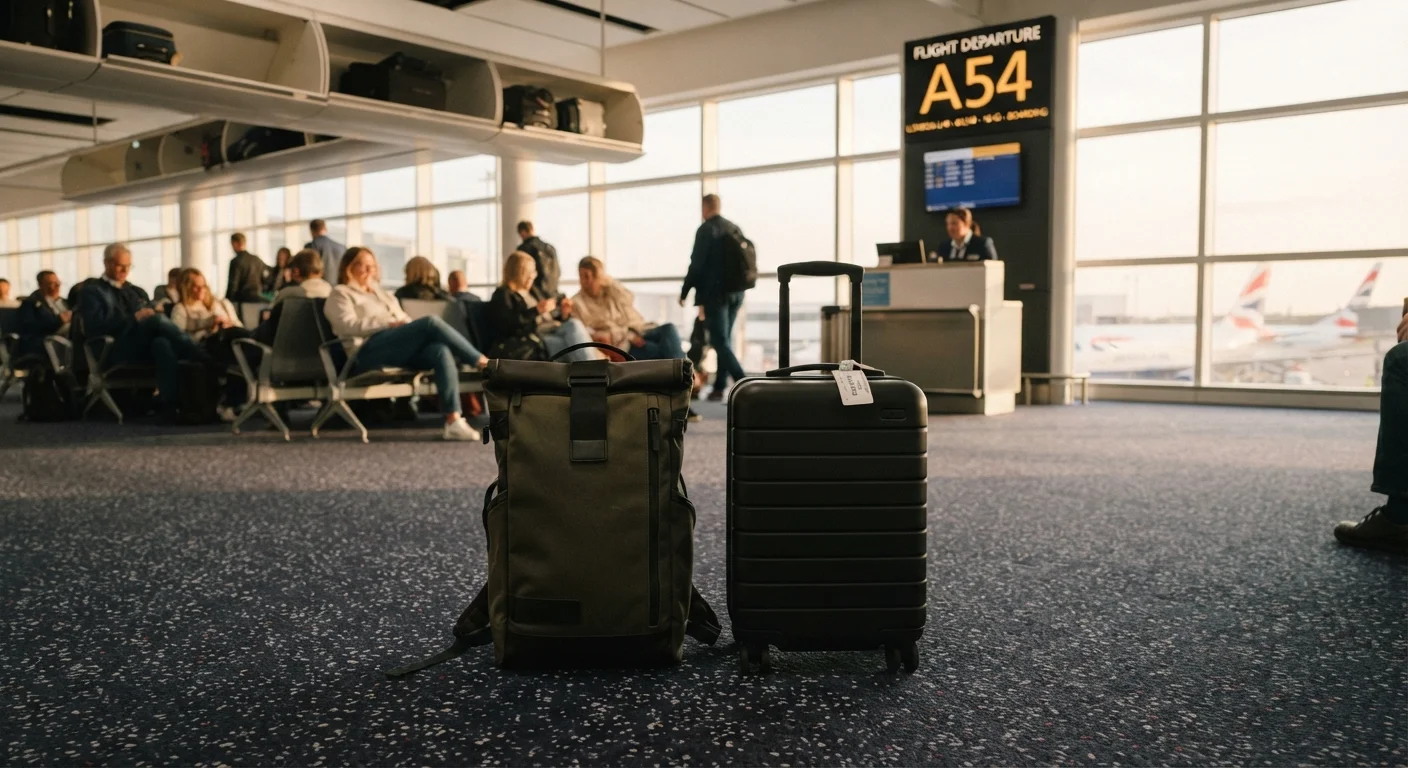
Without checked luggage, you can use self-serve kiosks or mobile boarding passes and head straight to security. On arrival, you walk off the plane and out of the airport without waiting at baggage claim.
No risk of lost or delayed luggage
The US Department of Transportation receives hundreds of thousands of mishandled baggage reports annually. Keeping your bag in the cabin eliminates that risk entirely.
Greater mobility between destinations
A single carry-on is far easier to manage on trains, buses, and walking routes between stops, which matters especially on multi-city itineraries where you are moving every day or two.
Forces genuinely useful packing decisions
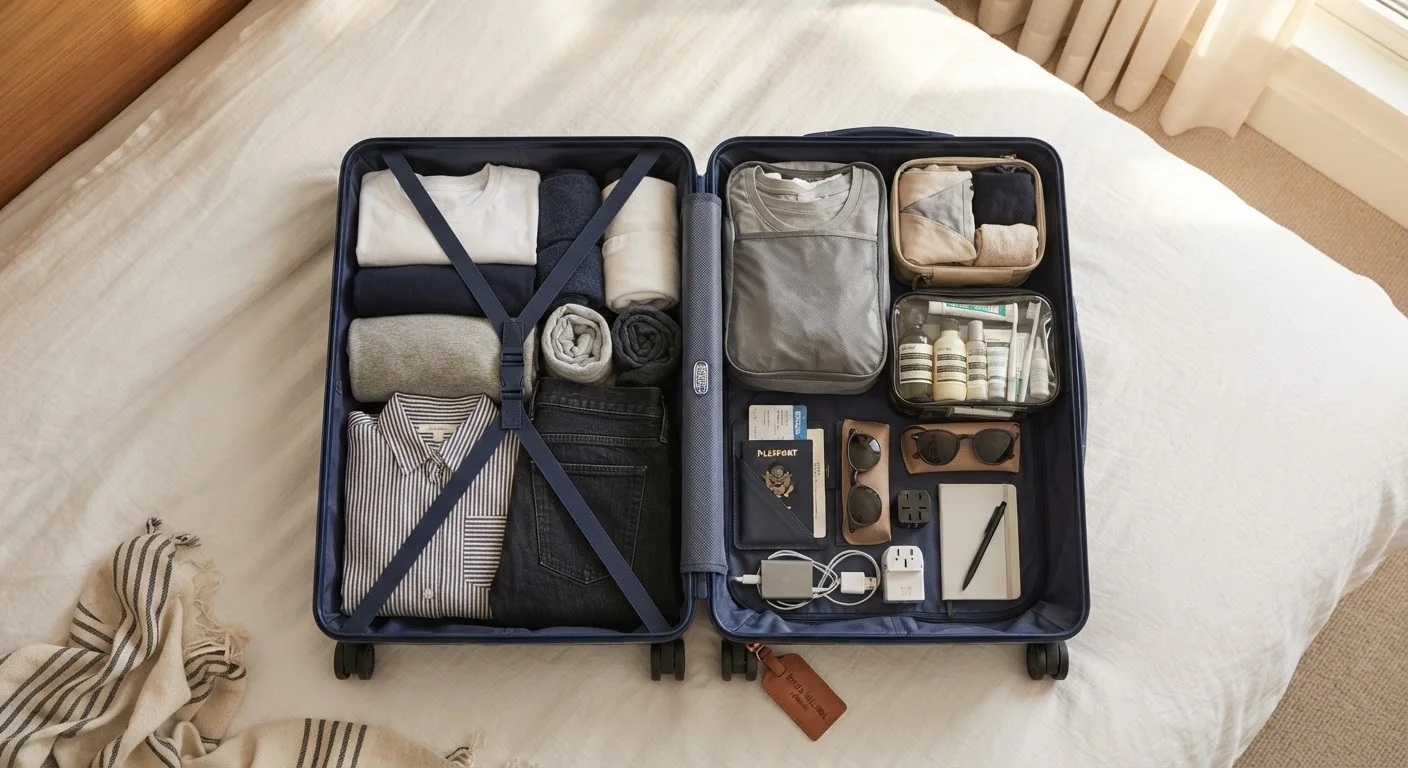
The size constraint eliminates the tendency to pack 'just in case' items that never get used. Travelers who pack light consistently report they rarely miss what they left behind.
For trips under two weeks to warm or urban destinations, these advantages consistently outweigh the inconvenience of packing light. Pairing a carry-on strategy with proven packing principles makes the process considerably less stressful.
Where the carry-on approach breaks down
Size and weight limits are strict and vary widely
Budget carriers such as Spirit and Frontier have different carry-on dimensions and policies than full-service airlines, and regional jets often require gate-checking even standard-size bags. Always verify the specific aircraft and carrier rules before you pack.
Cold-weather or gear-heavy trips are genuinely difficult
Heavy coats, hiking boots, ski gear, or scuba equipment do not compress into a 22-inch roller bag. Trips requiring specialized or bulky items often make a checked bag the more practical choice.
Toiletry restrictions create real limitations
TSA's 3-1-1 rule limits liquids to 3.4-ounce containers in a single quart-sized bag. Travelers who rely on specific medications, skincare products, or grooming items in larger quantities will need to plan around this or check a bag.
Overhead bin space is not guaranteed
On full flights, flight attendants may gate-check carry-ons at no cost but with no guarantee of timely return at your destination. This partially removes the speed advantage of traveling light.
Longer trips require laundry planning
Two weeks of clothing for one person is manageable in a carry-on only if you plan to do laundry. Not every destination or accommodation makes that easy, and building laundry stops into your schedule takes time.
None of these limitations are reasons to avoid carry-on travel altogether. They are reasons to assess your specific trip honestly before committing. A winter trip to Colorado is a different problem than a five-day city trip in spring.
Airline carry-on policies differ more than you might expect
A bag that fits on one carrier may be gate-checked on another. Budget airlines frequently have smaller size allowances and may charge for carry-ons placed in the overhead bin, not just the checked luggage hold. Before packing, look up the specific aircraft type on your route, since regional jets often have narrower overhead bins than mainline planes. Verify policies directly with the airline rather than relying on general summaries.
How to decide whether carry-on only is right for your trip
Start with three questions. First, what is the climate, and does it require heavy or bulky clothing? Second, how many nights will you be away, and do you have reliable access to laundry? Third, do you have medications, equipment, or professional items that require more space or volume than TSA allows in a carry-on?
If you answer yes to any of those questions, a checked bag may be the practical choice, and that is not a failure of planning. The goal is a trip that works, not a trip that proves a point about packing light.
Carry-on travel also pairs well with flexible itineraries where you are moving between destinations on short notice. If you are still deciding between a structured plan and a more open schedule, weighing itinerary planning against spontaneous travel lays out those trade-offs clearly.
For travelers who fly frequently, the cumulative baggage savings across a year can be substantial enough to fund an additional trip. That calculation is worth doing before each travel season, especially if you are working from a defined travel budget. Planning a trip on a tight budget walks through how to structure those decisions from the start.