

Why the advertised price is never the whole price
A $59 flight sounds straightforward until the checkout screen adds a carry-on fee, a seat assignment charge, and an airport facility tax. That $59 can become $130 before you enter a payment method. The same dynamic applies to hotel rates, vacation rentals, and even bus tickets on some carriers.
This unbundling is legal and widely practiced. Airlines and hotels disclose fees before you complete a purchase, but the fees appear late in the booking flow, after you have already mentally committed to the base price. Knowing where to look is the first step to avoiding the surprise.
For a broader look at where travel budgets quietly break down, your vacation budget is leaking in these five places covers the spending patterns that catch most travelers off guard.
Check the total price, not the base price
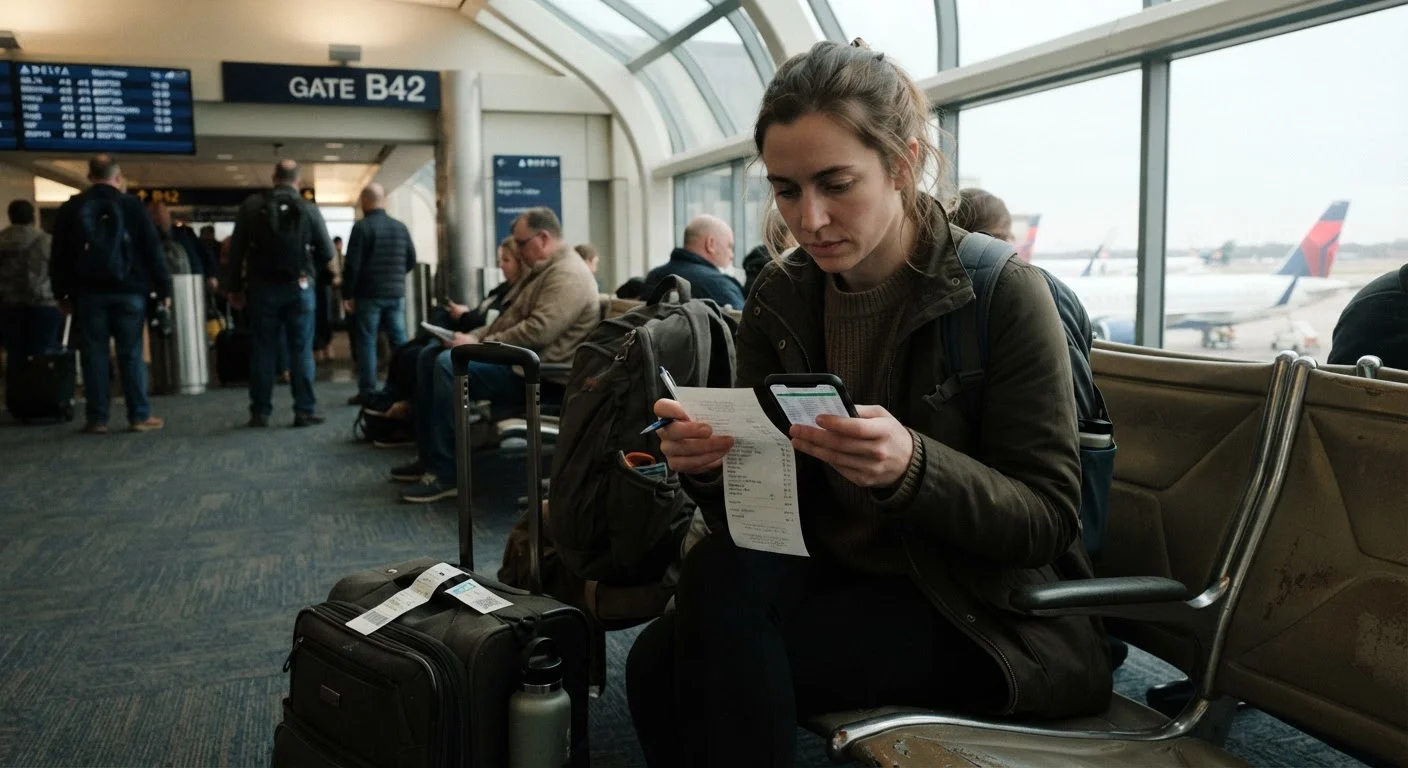
Before comparing fares or hotel rates, always click through to the final checkout screen where all fees are disclosed. Screenshot or note the full total for each option so you are comparing equivalent numbers. A fare that looks $40 cheaper can easily become $30 more once fees are included.
The fee categories most travelers underestimate
Baggage and seat fees: Many budget fares include only a personal item, smaller than a standard carry-on. A round-trip carry-on fee at several domestic carriers runs $35 to $70 per bag. Seat selection, including fees to avoid a middle seat, can add $10 to $50 per leg depending on the carrier and route.
Airport location and ground transport: Budget airports often sit 30 to 60 miles outside the city they nominally serve. A round-trip shuttle or rideshare from those airports can cost $80 to $120, erasing the savings from a low fare. Always price the full door-to-door transfer before comparing fares across airports.
Hotel resort and amenity fees: These nightly charges range from $20 to over $50 at many US properties and at popular international destinations. They are collected separately, sometimes at check-in rather than at booking. Budget for them as part of your nightly lodging cost, not as a surprise at the front desk.
Vacation rental cleaning and service fees: Short-term rental platforms frequently add cleaning fees of $75 to $200 and a service fee on top of the nightly rate. A rental that advertises $80 a night can cost $160 or more per night once fees are spread across a short stay.
$120+
Typical round-trip ground transfer from some budget airports
Travelers using secondary airports far from city centers routinely pay $80 to $120 or more round-trip for shuttles or rideshares, based on commonly reported fares for airports like Newark-to-Manhattan routes.
$50/night
Resort fee ceiling at many US hotels
Resort fees at domestic US properties commonly range from $20 to over $50 per night and are collected separately from the advertised room rate, per general industry reporting.
3%
Maximum foreign transaction fee on many credit cards
Cards that do charge foreign transaction fees typically assess 1 to 3 percent on each international purchase, an ongoing cost that accumulates across a multi-day trip.
Meals, activities, and the costs that are hardest to predict
Food is the budget category travelers most consistently underestimate. Three meals a day for two people in a mid-size US city can run $100 to $150 daily even without restaurant splurges. At popular international destinations, that figure varies widely, but it rarely trends toward zero.
Activities, entrance fees, and tours add up in ways that are harder to research in advance. National park passes, museum admissions, guided excursions, and equipment rentals each carry their own price. Build a list of what you plan to do and look up current admission costs before you set a trip budget.
Currency conversion fees and foreign transaction charges on credit cards are another quiet cost. Some cards charge 1 to 3 percent on every international purchase. Choosing a card without foreign transaction fees before departure avoids this entirely, at no change to your spending behavior. For guidance on which financial considerations to evaluate, see budgeting basics.
Building a complete cost picture before you book
A practical approach is to build a line-item estimate covering every cost category before you commit to any booking. List the base fare, then add each fee category separately: bags, seats, ground transport both ways, lodging taxes and resort fees, and a daily meal and activity allowance.
Compare this total against what you would spend on a different transportation option. Road trip vs. flying shows how gas, tolls, and overnight stops factor into the real cost of driving versus flying for American families.
Packing decisions also affect the bottom line. Traveling with only a carry-on avoids checked-bag fees entirely on most carriers, though it requires planning. Carry-on only travel lays out the trade-offs honestly so you can decide whether packing light fits your specific trip.
Once you have a full estimate, compare it against your available travel savings. Saving and emergency funds covers how to build a travel reserve without disrupting your regular financial goals. For a structured planning walkthrough, planning a trip on a tight budget sequences every decision from setting a limit to making the final booking.