
Why most packing goes wrong
Most overpacking happens before the trip even starts. Travelers imagine worst-case scenarios, then stuff a bag for every one of them. The result is a suitcase full of "just in case" items that never leave the hotel room, plus checked bag fees that were avoidable.
The fix is not packing less for its own sake. It is packing for the trip you are actually taking. That means looking at your confirmed itinerary, the real weather forecast for your travel dates, and the realistic number of times you will do laundry or dress formally. When you pack to a specific plan, every item earns its place.
If you find your trips themselves tend to go sideways before you even get to packing, see our guide on common trip-planning mistakes for the upstream habits worth fixing first.
Build a master list you actually reuse
A master packing list is not a packing list for one trip. It is a document you refine over time, based on what you used and what you carried home untouched. Start with categories: clothing, toiletries, documents, electronics, medications, and trip-specific gear. Within each category, list only items that showed up useful on a past trip.
After every trip, take five minutes to note what you forgot and what you never opened. Adjust the list accordingly. Within two or three trips, you will have a reliable baseline that adapts to any destination with minor edits rather than a full rebuild.
Store the list somewhere you can access it from your phone, whether that is a notes app, a shared document, or a simple text file. The goal is to never start from a blank page again.
Choose clothes that actually work together
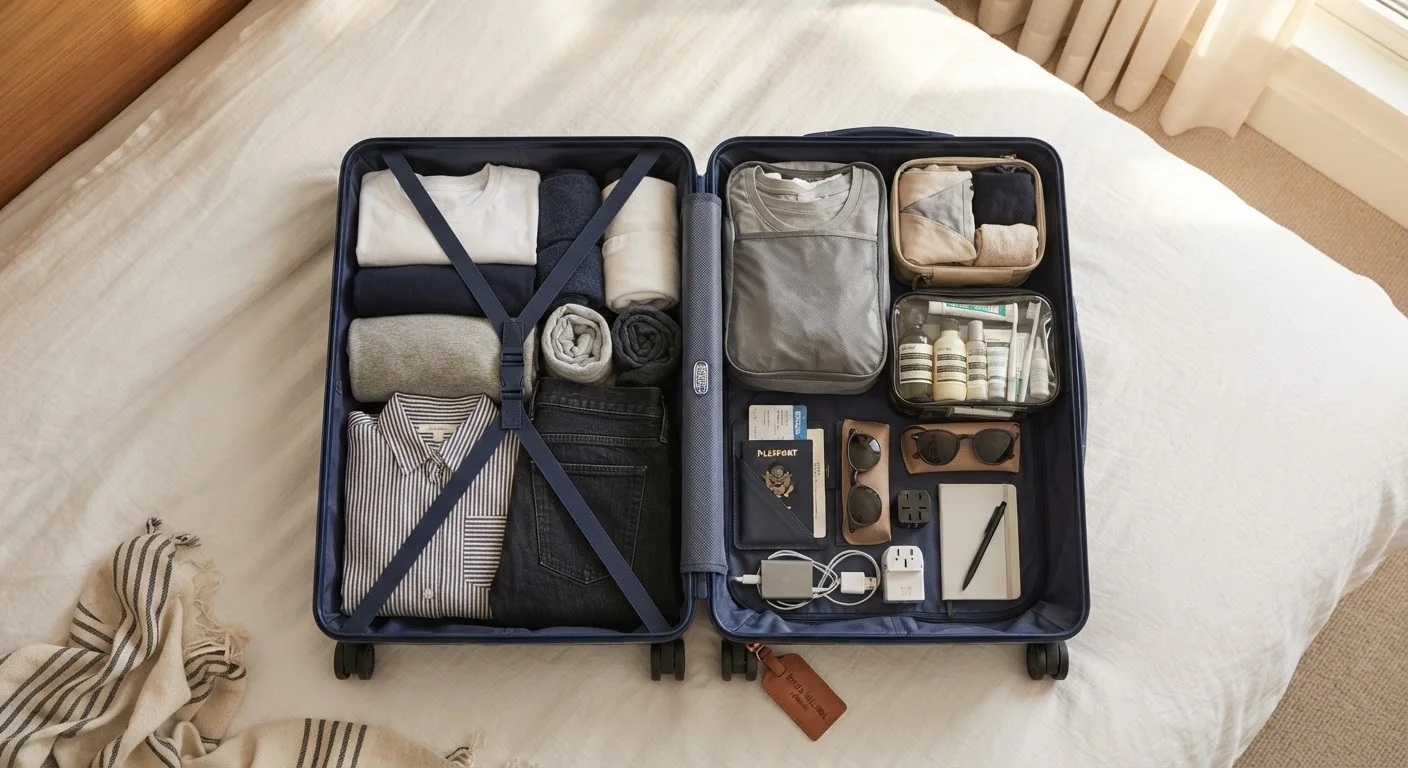
Clothing is where most bags go wrong. The principle is simple: every piece should work with at least two others already in the bag. A shirt that pairs with only one pair of pants is a low-value item. A neutral-color layer that works over any top, in any weather, is a high-value item.
Stick to two or three base colors and one accent. This is not a fashion rule; it is a logistics rule. When colors coordinate, you generate more outfit combinations from fewer pieces, which means fewer pieces total.
For most domestic trips under a week, three to four bottoms and five to six tops cover the full trip, including one repeat. For longer travel, factor in laundry access. Many hotels and vacation rentals have in-unit or on-site laundry, which lets you pack for half the trip and wash at the midpoint.
For a fuller look at what carry-on-only travel actually requires in terms of clothing choices and trade-offs, see carry-on only travel.
Toiletries, documents, and the carry-on question
Toiletries are the second-biggest source of wasted space. Most travelers carry full-size products when travel-size versions, or products available at the destination, would do the same job. For flights, all liquids must meet TSA rules: containers of 3.4 oz (100 ml) or less, fitting into one quart-sized clear bag per person. Verify current TSA requirements at tsa.gov before your trip, since rules can change.
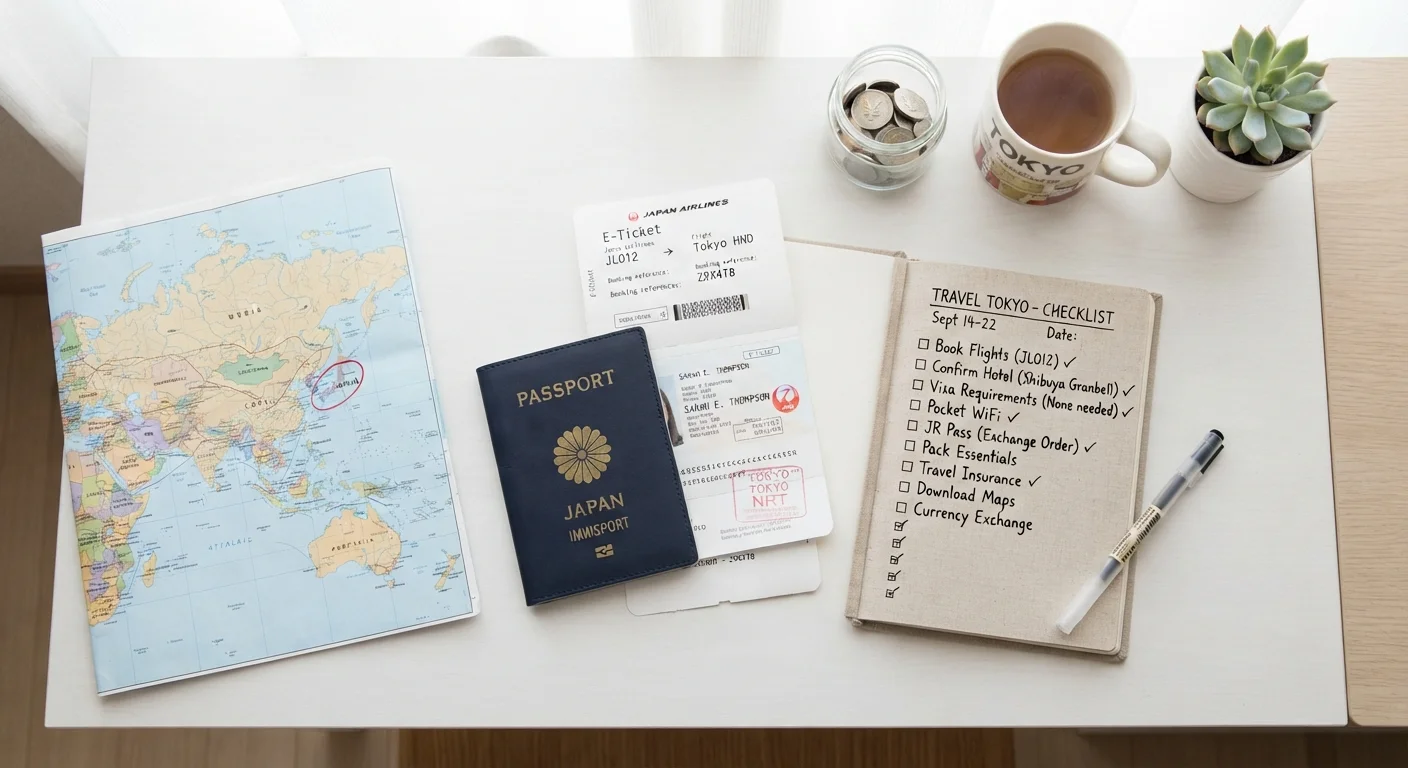
Documents deserve a dedicated pocket or pouch, never scattered across the bag. At minimum: government-issued ID or passport, any required visas, travel insurance confirmation, and printed or downloaded copies of accommodation and transportation bookings. Keep digital backups in a cloud folder you can access offline.
The carry-on question comes down to trip length and destination. Carry-on only works well for trips up to about a week if you pack efficiently and have laundry access. Longer trips, cold-weather destinations, or trips requiring formal wear often justify a checked bag. Weigh that cost against the airline's checked bag fee before deciding. For budget-focused planning, our step-by-step budget travel guide covers how to factor bag fees into your overall trip budget.
The final check before you zip up
Before closing the bag, run a single deliberate pass: pick up each item and ask whether it is on the itinerary or genuinely needed for safety and health. If the honest answer is no, set it aside. This pass typically removes three to five items from a bag without affecting the trip at all.
Weigh the bag if you are flying. Most airlines publish weight limits on their websites, and overweight fees can exceed the cost of a checked bag upgrade. A basic luggage scale costs little and pays for itself on the first trip where it saves an overweight fee.
Pack your bag a day before departure, not the morning of. Packing the night before gives you time to realize something is missing without the pressure of a departure countdown. It also means you are not hunting for a charging cable at 5 a.m.
Travelers who build these habits across trips find that packing stops being a source of stress and becomes a short, predictable task. That time and mental energy go toward the trip itself, which is the point. For more on managing travel costs broadly, see the budget travel hub.