

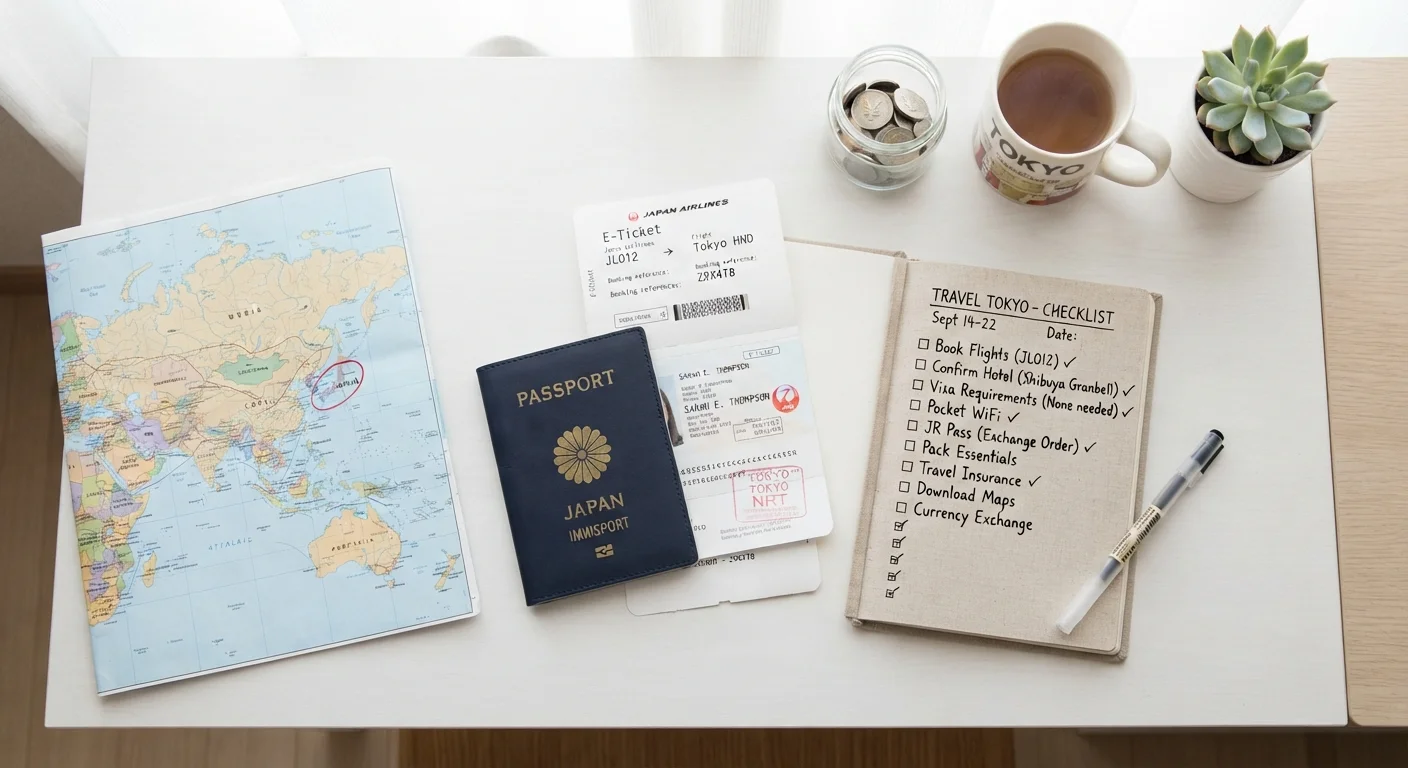
Why a pre-trip checklist matters
Most travel problems that feel sudden are actually foreseeable. A passport discovered to be expiring in two months, a visa that takes six weeks to process, a credit card declined abroad because the bank wasn't notified: these are planning gaps, not bad luck. This checklist walks you through the categories worth verifying before you commit money to flights, hotels, or tours, whether you're driving to a national park or flying to another country.
Work through each group in order. Some items apply only to international travel and are labeled as such. For a deeper look at traveling internationally for the first time, see our guide to planning your first international trip from the US.
Identity documents and entry requirements
Health and safety checks
Travel insurance review
Financial preparation
Bookings and itinerary verification
Home and logistics before you leave
Tools and resources you will need
You don't need specialized software to plan well, but a few reliable resources make the process faster and more accurate. The tools below are either free government sources or standard financial accounts most travelers already have.
US Department of State travel website
Look up entry requirements, travel advisories, and visa information for any destination.
CDC Travelers' Health site
Review destination-specific vaccination recommendations and health notices.
Your bank's mobile app or phone line
Set travel notifications and confirm your card's foreign transaction fees and international capabilities.
Cloud storage or secure email
Store digital copies of your passport, visa, itinerary, and booking confirmations accessible from any device.
Travel insurance comparison site (general)
Review policy types and coverage structures before selecting a plan that fits your trip.
How to use this checklist effectively
Print or copy the checklist and work through it at least 6 to 8 weeks before your travel date for international trips, and at least 2 weeks out for domestic travel. Items marked must are non-negotiable: skipping them can result in denied boarding, refused entry, or significant financial loss. Items marked should reduce friction and risk. Items marked nice to have improve your experience without being essential.
Once you've confirmed the logistics, packing is the next practical step. Our packing strategies guide covers principles that work regardless of destination or trip length. If you're working within a limited budget, the step-by-step budget travel planning guide covers how to sequence bookings to keep costs in check. For building a travel reserve in advance, the saving and emergency funds hub has practical approaches.
Don't rely on summaries for insurance terms
Credit card travel benefits and insurance policy summaries frequently omit key exclusions. Always read the actual terms and conditions for coverage limits, pre-existing condition clauses, and what qualifies as a covered reason for cancellation. A benefit that sounds comprehensive may not cover your specific situation.
If you're including a long drive in your trip, run through the driver safety checklist for long road trips before departing. It covers tires, fluids, and emergency gear that are easy to overlook.
Official sources only for entry and health rules
Entry requirements, visa rules, and vaccination mandates change without broad public notice. Travel blogs, forums, and third-party booking sites often carry outdated information. Always verify requirements directly with the US Department of State, the CDC, and the destination country's official embassy or consulate website before booking or traveling.