
Why a pre-trip checklist matters
Most roadside breakdowns are preventable. Low tire pressure, a dying battery, or an empty windshield washer reservoir are not surprises that come out of nowhere. They build slowly, and a 30-minute walk-around before departure catches nearly all of them.
This checklist is organized by system so you can move through your vehicle efficiently. It covers the mechanical, electrical, and safety items that affect highway driving specifically, not just around-town errands. For seasonal preparation that runs deeper, see our guide on seasonal car care. If you are coordinating travel logistics alongside your drive, the pre-trip planning checklist covers documents, insurance, and itineraries.
Tires and wheels
Fluids
Lights and electrical
Brakes and steering
Emergency supplies
Driver readiness and route prep
Tools and supplies you will need
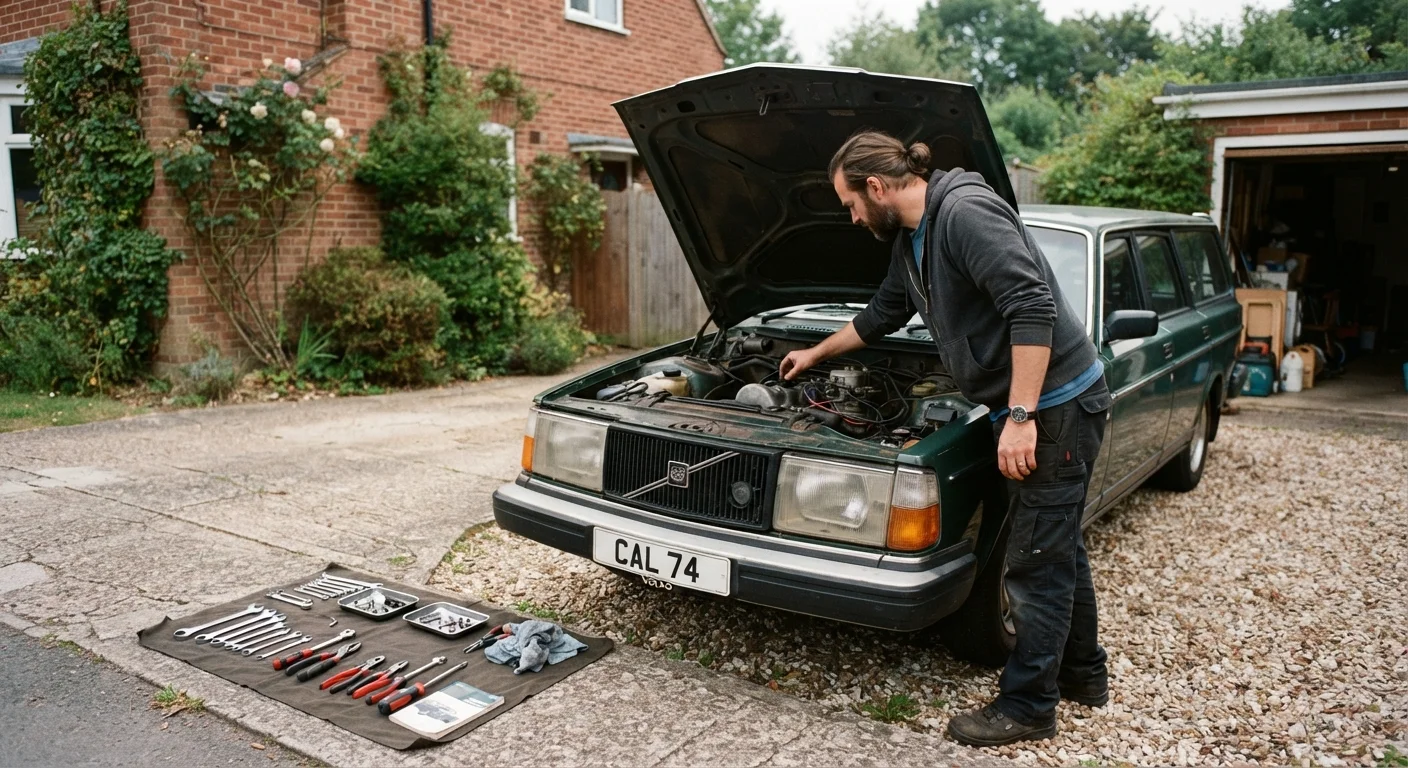
You do not need a full garage setup to work through this checklist. These are the basics that let you check, top off, or swap items yourself before calling a mechanic for anything beyond your comfort level.
Tire pressure gauge
Measures cold inflation pressure in each tire so you can match the door-jamb specification accurately.
Flashlight or work light
Lets you inspect the engine bay, tire sidewalls, and undercarriage in low light.
Funnel and fluid top-off supplies
Allows you to add coolant, oil, or washer fluid without spilling onto other engine components.
Jumper cables or portable jump starter
Restarts a dead battery on the road without waiting for another vehicle.
Tread depth gauge or quarter coin
Gives a quick measurement of remaining tire tread before a highway trip.
Tires: the single most critical system
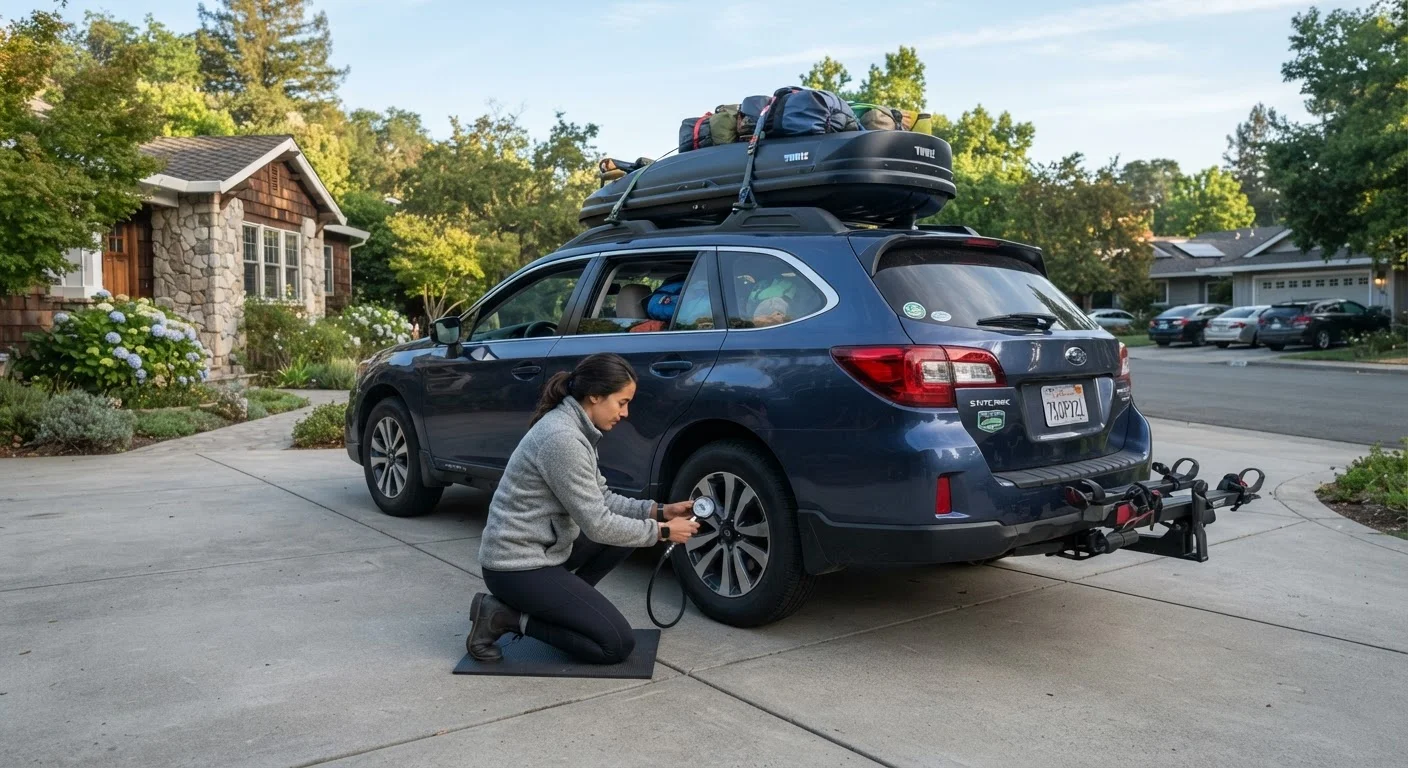
Tires affect everything: braking distance, fuel economy, and how the vehicle handles a sudden swerve. Cold inflation pressure (checked before driving) should match the number printed on the driver's door jamb sticker, not the maximum stamped on the tire sidewall. For a complete explanation of pressure, tread wear indicators, and rotation intervals, see our dedicated guide on tire pressure, tread, and rotation.
Never check tire pressure on a hot tire
Driving even a few miles heats the air inside the tire, raising pressure readings by 4 to 6 psi above the actual cold pressure. Always measure tire pressure before the vehicle has moved that day, or after it has sat for at least three hours. Inflating a hot tire to the door-jamb cold specification will result in underinflation once the tire cools.
The spare tire is frequently forgotten until it is needed. Confirm it holds pressure and that the jack and lug wrench are present and accessible before every long trip.
Visibility and driver condition
Mechanical checks address the vehicle, but driver condition affects safety just as directly. Fatigue impairs reaction time in ways that parallel alcohol impairment at certain sleep-deprivation levels, according to the National Highway Traffic Safety Administration. Plan rest stops every two hours or 100 miles, whichever comes first.
Visibility equipment matters too. Wiper blades that streak or skip in light rain become dangerous in heavy rain. For guidance on adapting your driving once conditions deteriorate, see driving in rain, snow, and fog. If your trip involves night driving, night driving demands different habits worth reviewing before departure.
Share your planned route and estimated arrival time with someone not traveling with you. If a breakdown or emergency occurs in a low-signal area, that contact can initiate help.