
Why fluid levels matter more than most drivers realize
Your car depends on several distinct fluids to move, stop, stay cool, and steer. When any one of them drops below its operating range, the consequences range from accelerated wear to outright mechanical failure. The good news is that checking most of them takes under ten minutes and requires no special tools.
This reference covers the six fluids every driver should monitor, what each one does, where to find it, and what low or degraded fluid looks like in practice. For a broader view of how these checks fit into a regular schedule, see Your Car's Maintenance Schedule, Decoded.
| Engine oil check interval | Monthly, or before long trips |
| Brake fluid flush frequency | Every 2 years (typical manufacturer guidance) |
| Coolant check safety rule | Never open the cap on a hot engine |
| Transmission fluid color (healthy) | Red, slightly transparent |
| Washer fluid winter requirement | Use freeze-rated formula, not plain water |
| Low oil pressure light response | Stop driving as soon as safely possible |
The six fluids and what they do
Engine oil
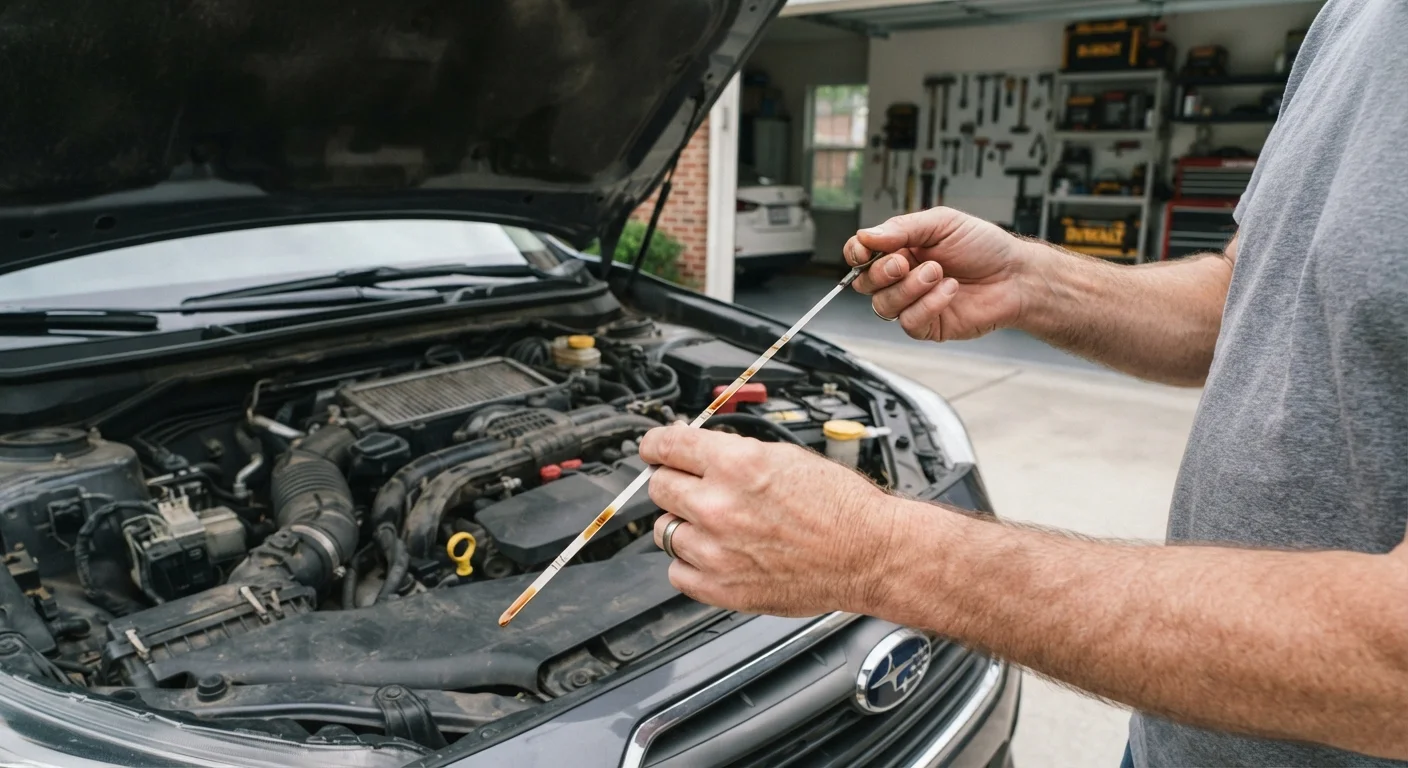
Engine oil lubricates moving metal parts inside the engine, reducing friction and carrying heat away from surfaces that would otherwise weld themselves together under load. Check it with the dipstick when the engine is cold and parked on level ground. The oil should sit between the two marks on the stick and appear amber to light brown. Dark black oil that smells burned has broken down and needs changing. Oil that looks milky or foamy may indicate coolant contamination, which warrants immediate attention from a qualified mechanic.
Engine coolant (antifreeze)
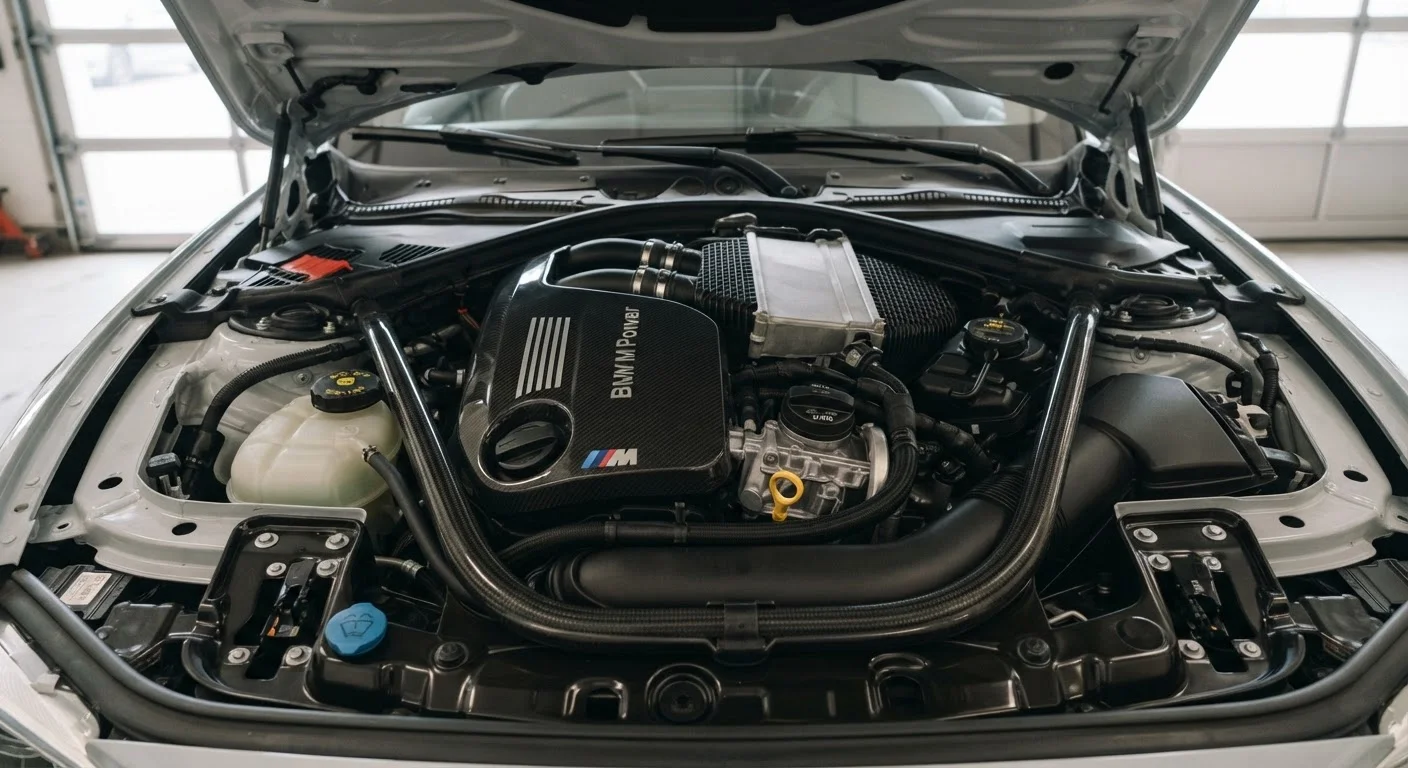
Coolant regulates engine temperature and prevents freezing in winter and boiling in summer. The reservoir is usually a translucent plastic tank near the radiator with MIN and MAX lines visible from outside. Never open the radiator cap when the engine is hot; pressure in a hot cooling system can cause serious burns. Coolant should be a bright green, orange, or pink depending on the type your vehicle uses. A rusty or oily appearance signals contamination.
Brake fluid
Brake fluid transmits the force from your pedal through hydraulic lines to the calipers at each wheel. It lives in a small translucent reservoir near the firewall on the driver's side. Fresh brake fluid is nearly clear to light yellow. Dark brown fluid has absorbed moisture over time and loses its boiling point, which can cause brake fade under hard use. Most manufacturers recommend flushing it every two years regardless of mileage. If the level drops noticeably without explanation, have a mechanic inspect the system for a leak before driving further.
Power steering fluid
Vehicles with hydraulic power steering use fluid to assist turning effort. The reservoir typically has a dipstick attached to its cap or MIN/MAX lines on the side. Low fluid usually produces a whining noise when you turn the wheel. Many newer vehicles use electric power steering and have no fluid reservoir at all; check your owner's manual if you are unsure which system your car has.
Transmission fluid
Transmission fluid lubricates and cools the gears and clutch packs inside the gearbox. Automatic transmissions generally have a dipstick (check it with the engine warm and running, in park), while many modern automatics are sealed and require a mechanic to service. Manual transmissions use gear oil checked through a fill plug on the side of the housing. Healthy transmission fluid is red and slightly sweet-smelling. Dark, burnt-smelling fluid needs replacing.
Windshield washer fluid
Washer fluid is the one fluid you can fill yourself with zero mechanical risk. Use a solution rated for the temperatures in your area; plain water can freeze in the lines and crack the reservoir in winter. Running dry is an inconvenience in summer but a safety issue on a salted winter highway where road grime coats the glass.
For a seasonal checklist that ties all these fluids together, Seasonal Car Care is a useful companion reference.
Hydraulic brake system
A system that uses incompressible fluid to transfer pedal force to the brake calipers at each wheel. It relies on sealed lines and consistent fluid quality to function safely.
Coolant (antifreeze)
A liquid mixture, typically ethylene glycol and water, that circulates through the engine and radiator to regulate operating temperature in both hot and cold conditions.
Viscosity
A measure of how thick or thin a fluid is and how it flows. Engine oil viscosity ratings (such as 5W-30) indicate how the oil behaves at cold starts and at operating temperature.
Brake fade
A reduction in braking effectiveness that occurs when brake fluid overheats and partially vaporizes inside the hydraulic lines. Degraded fluid with a lower boiling point is more prone to this.
Sealed transmission
A transmission designed without a user-accessible dipstick. Fluid level and condition in these units must be checked by a mechanic using a fill plug and specialized equipment.
Reading the warning signs
Dashboard warning lights for low oil pressure, coolant temperature, and brake system faults exist because by the time they illuminate, something is already wrong. Do not treat a lit oil pressure light as a reminder to top off; shut the engine off as soon as it is safe to do so and investigate before driving further.
Fluid leaks on the pavement under a parked car carry meaning. A clear puddle near the front is often condensation from the air conditioner, which is normal. An oily slick, a sweet-smelling green or orange puddle, or a reddish film each point to a specific system that needs attention. The color and location together help narrow the source.
If you find yourself topping off the same fluid repeatedly, that is not a maintenance habit; it is a symptom. A fluid that keeps disappearing is either burning inside the engine, leaking externally, or being contaminated by another fluid. Each scenario needs a diagnosis, not just more fluid.
Drivers who want to understand which tasks they can confidently handle themselves will find DIY Maintenance vs. Taking It to a Shop a helpful guide to where the line is. Brake fluid flushing and transmission servicing, for example, are tasks where a professional's involvement is generally the safer route. Staying on top of fluid health is also one of the small maintenance habits that prevent expensive repairs down the road.