
Why the owner's manual is the right starting point
Generic maintenance advice circulates constantly, and much of it is outdated or wrong for your specific vehicle. A 3,000-mile oil change, once standard, is now unnecessary for most modern cars. Blanket recommendations about transmission flushes, coolant swaps, and timing belt replacements vary dramatically by make and model. The only document written for your exact engine, drivetrain, and component specifications is the owner's manual.
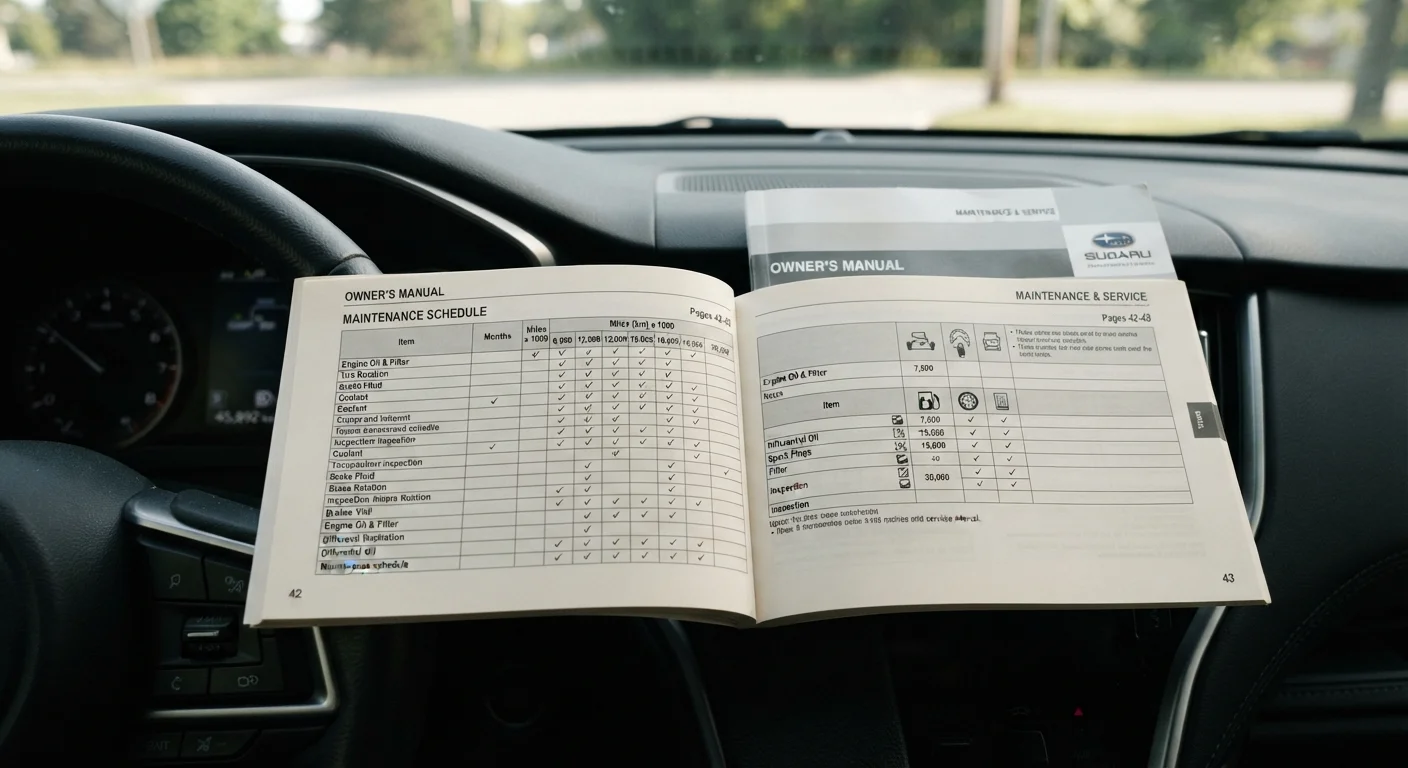
Every owner's manual contains a dedicated maintenance section that lists service tasks by mileage and time. If you bought the car without a manual, the manufacturer's website typically lets you access one by VIN or model year. Some automakers also build the schedule into the vehicle's infotainment system or a companion app. Start there before relying on any shop's posted service menu, which may include upsells not required by your manufacturer.
Small maintenance habits compound over time: what looks like a minor schedule means a lot less wear and fewer surprise repair bills down the road.
What the intervals actually mean
Most schedules use two types of intervals: mileage-based and time-based. Mileage-based intervals trigger at specific odometer readings. Time-based intervals apply regardless of how far you drive, because fluids degrade, rubber hardens, and moisture infiltrates components whether the car moves or not.
Oil and filter changes appear most frequently. Vehicles running conventional oil typically need changes every 5,000 to 7,500 miles; those running full synthetic can stretch to 10,000 miles or beyond, depending on the manufacturer. Your choice of oil type directly affects how often this service is due.
Tire rotation is typically recommended every 5,000 to 7,500 miles. Uneven wear shortens tire life significantly, and rotation patterns matter. For a full picture of what tire care involves, see our guide on tire pressure, tread, and rotation.
Air filters, cabin filters, spark plugs, brake fluid, coolant, and transmission fluid each carry their own intervals. Some are annual; others stretch to 30,000 or even 60,000 miles. Timing belts on interference engines carry especially serious consequences if missed: a snapped belt can destroy the engine. Check your manual specifically for this item and flag it well in advance.
Flag your timing belt interval now
If your vehicle has a timing belt rather than a timing chain, locate its replacement interval in your owner's manual today and mark it in your log. Interference engines can sustain severe internal damage if the belt snaps past its service life. This is one interval where early action is far less costly than waiting.
Normal vs. severe driving conditions
Maintenance schedules almost always include two tracks. Normal conditions describe highway-heavy, moderate-climate driving with trips long enough for the engine to reach full operating temperature. Severe conditions cover a wider range than most drivers expect.
Short trips under 10 miles, frequent idling in traffic, towing or hauling heavy loads, driving in dusty or unpaved environments, and sustained operation in temperatures below 10 degrees Fahrenheit or above 90 degrees all qualify as severe. So does extended use of four-wheel drive. If your daily commute involves frequent stop-and-go city traffic, you likely fall into the severe category even if the label sounds dramatic.
The practical difference: severe driving typically calls for more frequent oil changes, earlier brake inspections, and closer attention to transmission fluid. Running on the normal schedule when your conditions are actually severe accelerates wear on parts that have to work harder.
Seasonal car care checks pair well with your maintenance schedule, since temperature changes often coincide with interval milestones worth addressing.
42%
Drivers who skip or delay recommended services
According to survey data published by the Car Care Council, roughly 42% of vehicles on the road are overdue for at least one scheduled maintenance item.
7,500-10,000 mi
Typical synthetic oil change interval
Most current manufacturer schedules for vehicles using full synthetic oil specify intervals well above the old 3,000-mile guideline, per automaker documentation.
2 years
Common brake fluid inspection interval
Many manufacturers recommend inspecting or replacing brake fluid every two years regardless of mileage, since the fluid absorbs moisture from the air over time.
Keeping track without letting it overwhelm you
Multiple overlapping intervals are the part of maintenance schedules that trips people up. Oil is due at one mileage, tires at another, brake fluid annually, spark plugs at 60,000 miles. Holding all of it in your head is unrealistic. A physical maintenance log in the glove box or a free app designed for vehicle tracking makes the job straightforward. Log the date, mileage, and service performed each time.
Many modern vehicles include an oil-life monitoring system that calculates remaining oil life based on actual driving conditions rather than a fixed interval. When it reads low, that is a reliable trigger. For everything else on the schedule, mileage-based tracking is more accurate than relying on calendar dates alone.
When the check engine light comes on, that is not a substitute for scheduled maintenance: it signals a specific fault, not a general service reminder. Treating it as one can cause you to miss overdue items that do not trigger warning lights at all.
Understanding your vehicle's fluid levels between service visits is also worthwhile. Spotting a slow coolant or brake fluid drop early can flag a developing problem before it reaches a service interval.