
How the two oils are made
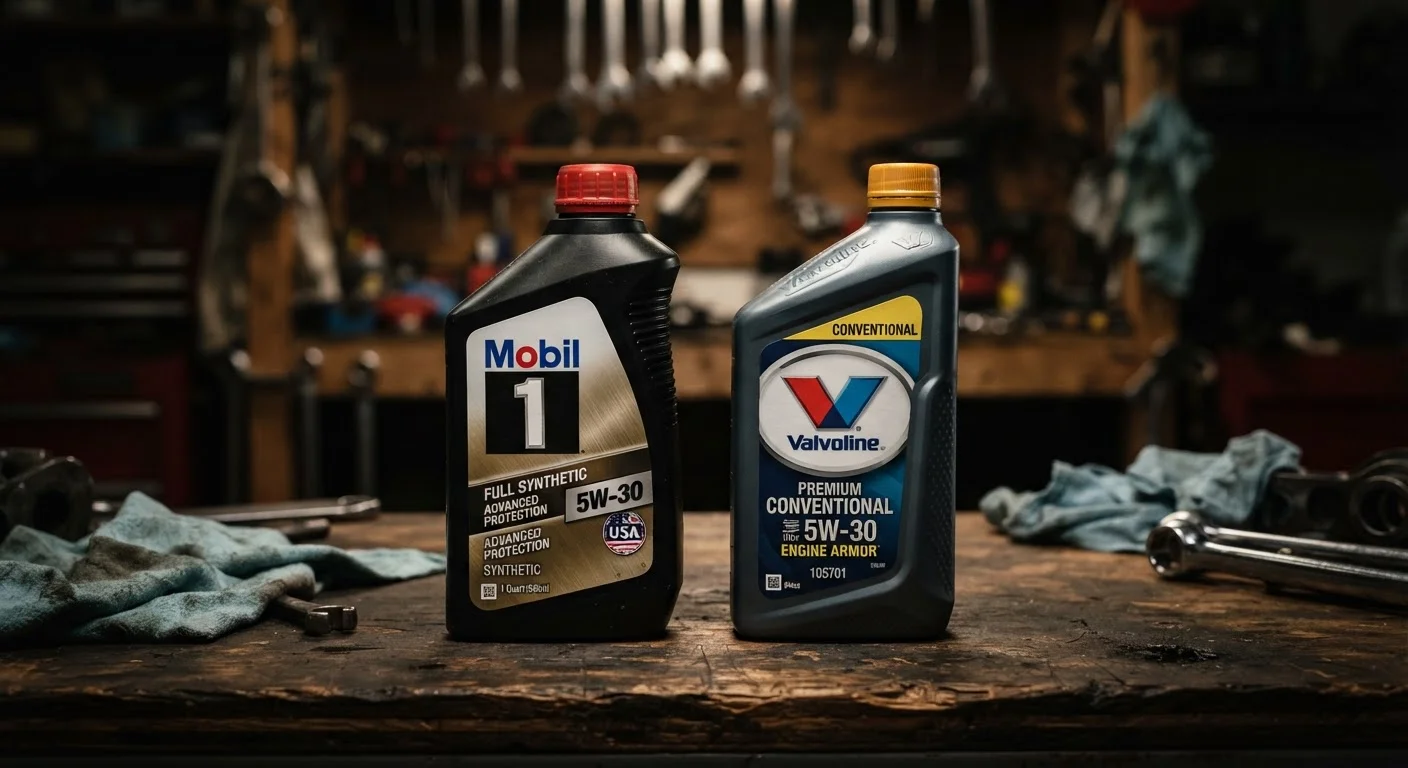
Conventional motor oil begins as crude petroleum extracted from the ground and refined to remove contaminants. The refining process improves the oil but cannot eliminate every irregularity in molecular size or structure. Those inconsistencies affect how the oil behaves across a wide temperature range.
Synthetic oil starts from a base stock that is either built from chemical compounds (usually polyalphaolefins, or PAOs) or refined to a much higher purity than conventional base stock. Manufacturers then add tailored additive packages covering detergents, antioxidants, friction modifiers, and viscosity improvers. The result is a fluid with a more uniform molecular structure that resists breakdown more predictably.
Synthetic blends occupy a middle ground: conventional base stock mixed with a portion of synthetic base stock, offering some of the stability benefits at a lower cost than full synthetic.
Performance differences that matter at the engine level
The molecular consistency of synthetic oil produces two practical advantages. First, it flows more readily at cold temperatures, reaching bearings and cam lobes faster during a cold start. Cold starts account for a disproportionate share of engine wear, so faster oil circulation matters. Second, synthetic oil holds its viscosity rating better under heat, which keeps an oil film between metal surfaces even after prolonged high-load driving.
Conventional oil can thin out more noticeably as operating temperatures climb, particularly under sustained highway driving or towing. It also oxidizes faster, meaning its additive package breaks down sooner and sludge deposits can form if change intervals slip.
| Criterion | Synthetic | Conventional |
|---|---|---|
| Base stock origin | Chemically engineered compounds | Refined crude petroleum |
| Typical change interval | 7,500 to 15,000 miles | 3,000 to 5,000 miles |
| Cold-start flow | Faster at low temperatures | Slower in cold conditions |
| Heat resistance | Holds viscosity better under load | Thins more under sustained heat |
| Cost per quart | Higher (approx. 2-4x more) | Lower upfront cost |
| Sludge resistance | Strong; cleaner engine deposits | Moderate; more frequent changes needed |
| Factory specification use | Required by most modern engines | Suitable for older, simpler engines |
For most late-model vehicles, these differences are significant enough that automakers specify full synthetic from the factory. If your owner's manual calls for a 0W-20 or 5W-30 full synthetic, substituting conventional oil voids that specification, even if the viscosity number matches.
Service intervals and the real cost comparison
Conventional oil in standard passenger-car service typically requires changing every 3,000 to 5,000 miles, though many modern formulations can go to 5,000 miles without issue. Synthetic oil is generally rated for 7,500 to 15,000 miles, depending on the vehicle, the oil specification, and driving conditions. Some manufacturers allow up to 10,000-mile intervals when using the specified synthetic grade alongside an oil life monitoring system.
Synthetic oil costs more per quart, often two to four times as much as conventional. Over a year of typical driving, however, fewer changes can bring the annual cost close to parity. The calculation shifts depending on whether you change oil yourself or pay a shop, and whether your driving patterns count as severe service (short trips, stop-and-go traffic, extreme temperatures), which shortens any interval. See how service intervals work in practice for a closer look at severe vs. normal duty cycles and what each classification means for your schedule.
High-mileage engines and switching oil types
A common concern is whether switching a high-mileage engine from conventional to synthetic will cause leaks. The basis for this worry is real: synthetic oil's superior cleaning ability can dislodge sludge that was incidentally sealing minor gasket or seal wear. If an engine's seals are already compromised, the switch can make a slow seep more visible.
This does not mean switching is harmful to a healthy high-mileage engine. A well-maintained engine with intact seals handles the transition without issue. Specialty high-mileage oils, available in both conventional and synthetic formulations, include seal conditioners and extra detergents designed for engines with significant miles.
The practical rule: if your current oil is clean and the engine shows no existing leaks, switching to synthetic carries minimal risk. If the engine already leaks and sludge buildup is suspected, address the mechanical issue before changing oil type.
What your owner's manual actually says
The definitive source for oil type and viscosity grade is always your vehicle's owner's manual. Manufacturers specify the minimum oil standard (such as API SN Plus or ILSAC GF-6) alongside the viscosity grade. Using an oil that meets or exceeds that specification is the baseline requirement. If the manual says full synthetic is required, that is not a suggestion; using conventional oil in that engine falls outside the designed operating parameters.