
What 'routine maintenance' actually means
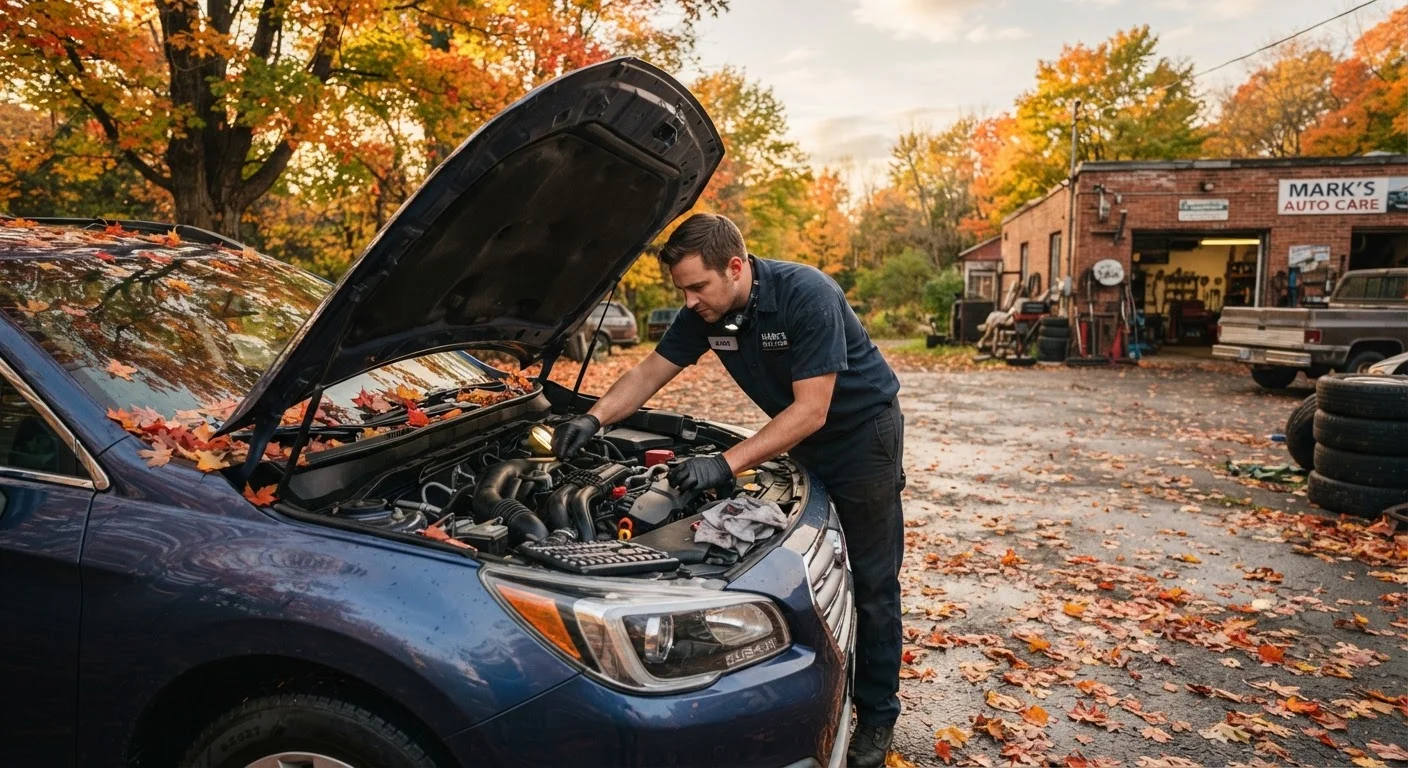
The term covers a wide range of tasks, and not all of them belong in the same category. At one end sit jobs that require little more than reading your owner's manual and buying the right part: cabin air filter swaps, windshield wiper replacements, checking and topping off fluids. At the other end sit jobs that require a vehicle lift, calibrated torque wrenches, electronic diagnostic tools, or safety certifications.
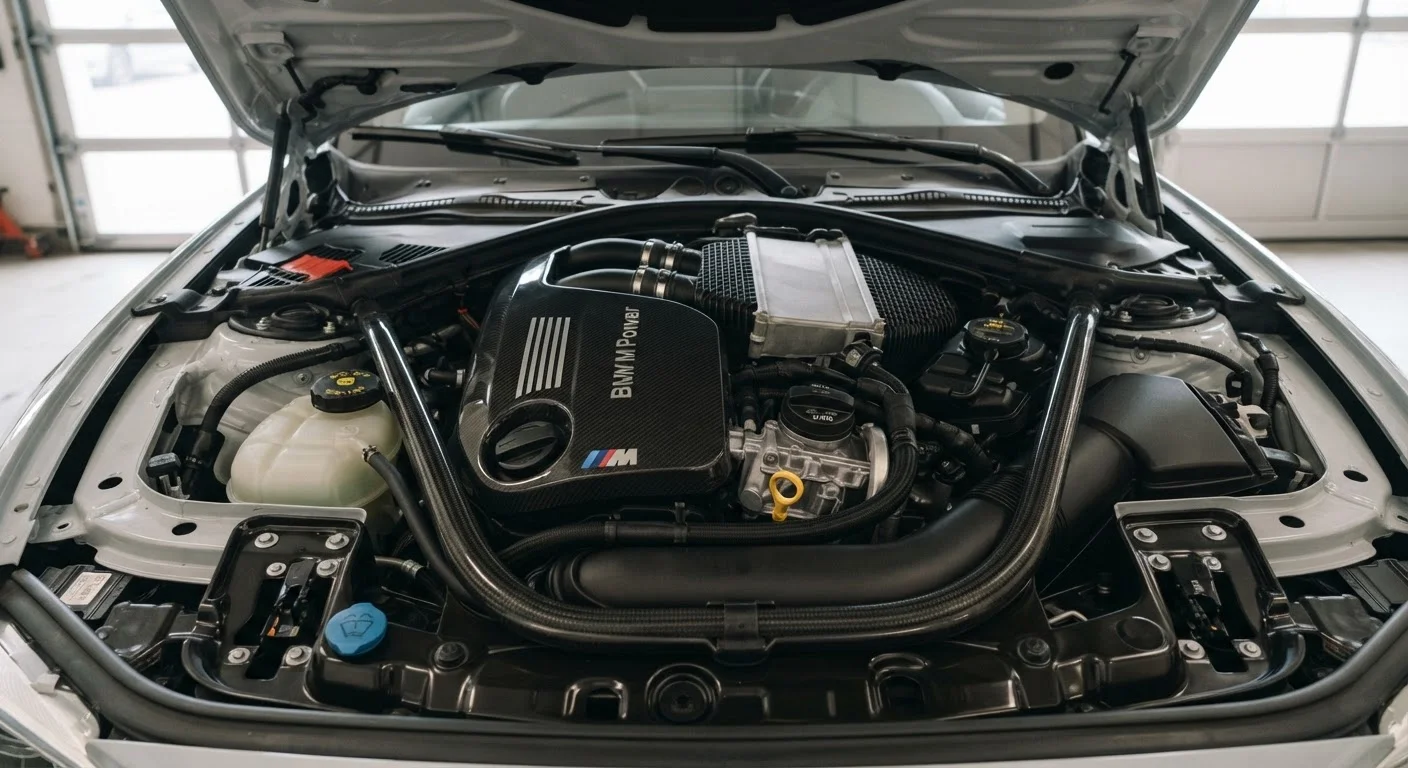
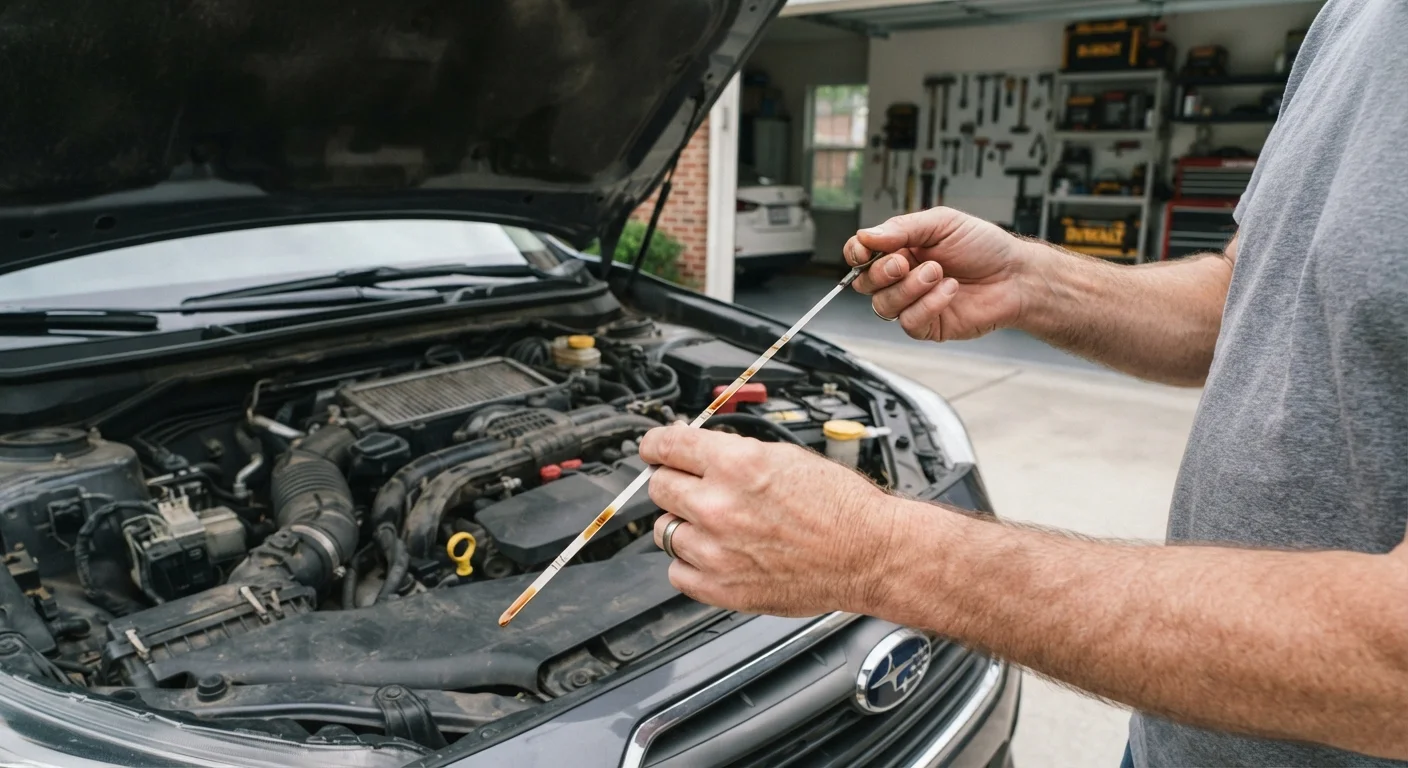
Understanding which fluids your car depends on is a good starting point. Checking coolant, brake fluid, power steering fluid, and engine oil requires nothing more than a clean rag and a few minutes. Replacing those fluids, however, varies in complexity: an oil change is manageable for most people with the right equipment, while a brake fluid flush involves bleeding the system and confirming there are no air pockets, which has direct consequences for stopping distance.
The same logic applies to tire pressure and tread checks. Monitoring both takes under five minutes and costs nothing beyond a gauge. Rotating tires yourself is possible if you own a quality floor jack, jack stands rated for your vehicle's weight, and know the correct torque for your lug nuts. Skipping any of those conditions turns a simple job into a wheel-off-highway incident.
Tasks that make sense to do yourself
Saves money on labor for simple tasks
Labor rates at independent shops commonly run $80 to $150 per hour. Tasks like air filter swaps or wiper replacements that take under 15 minutes cost primarily in parts when done at home.
Builds genuine familiarity with your vehicle
Regularly checking under the hood means you notice changes in fluid color, belt condition, or hose firmness before they become failures. That familiarity is hard to develop any other way.
Flexible scheduling with no waiting room
Home maintenance happens on your timeline. There is no appointment lead time, no shuttle arrangement, and no half-day lost at a shop for a 20-minute job.
Owner's manual tasks are designed to be accessible
Manufacturers write maintenance schedules with the assumption that some owners will perform basic items themselves. Cabin filters, wiper inserts, and battery terminal cleaning are straightforward by design.
The jobs above carry one thing in common: a mistake is either immediately obvious or correctable before you drive. A misrouted wiper blade chatters and you fix it in the driveway. An underfilled washer reservoir just means a dry spray. That margin for error is what makes DIY sensible for these items.
Building small maintenance habits around these tasks also pays off over time. Catching a dirty cabin filter before it strains your HVAC motor, or spotting low coolant before a summer highway run, heads off failures that cost far more than the part itself.
Jobs that belong in a shop
Mistakes on safety systems can cause serious harm
Errors in brake, steering, or suspension work do not always show up immediately; they can surface at highway speeds. The consequences of getting these wrong are not comparable to a misaligned wiper blade.
Many modern cars require specialized diagnostic tools
TPMS resets, transmission fluid changes with electronic controls, and even some oil change reminders require software-level access that basic consumer tools do not provide.
Improper disposal of fluids carries legal and environmental risk
Used motor oil, coolant, and brake fluid cannot go into regular trash or down a drain. Handling disposal correctly requires a trip to a recycling facility, which is a step many first-time DIYers overlook.
Voiding warranty coverage on newer vehicles
On vehicles still under a manufacturer or extended warranty, work performed outside of an authorized facility or without proper documentation can complicate coverage claims, depending on the terms of the warranty.
Tool and equipment costs offset savings on infrequent jobs
A quality torque wrench, floor jack, and jack stands represent a real upfront cost. For someone who performs maintenance rarely, the savings over a shop may not cover the investment for years.
Brake pads are the most common DIY overreach. Pad replacement itself is a moderate mechanical skill, but it requires proper bedding of the pads, correct torque on caliper bolts, and confirmation that rotors are within spec. An improperly reassembled caliper can seize, and a loose wheel bearing discovered mid-job demands equipment most home garages lack. For anything involving the brake hydraulic system, a licensed mechanic is the right person.
Suspension work, timing belt or chain service, fuel injector cleaning under pressure, and any job that trips a diagnostic trouble code all fall into the same category. Modern vehicles store fault codes that point toward a problem, but interpreting them accurately requires a scan tool that goes beyond the basic code readers available at parts stores. A code that says 'oxygen sensor circuit' might mean a faulty sensor, a wiring issue, or a more upstream problem; chasing the wrong fix wastes money and leaves the real issue unresolved.
Airbag system work is a hard stop. The pyrotechnic charges in airbag inflators can deploy without warning if handled incorrectly. This is not a cost-savings opportunity.
The tool and workspace question
When your workspace matters as much as your skill level
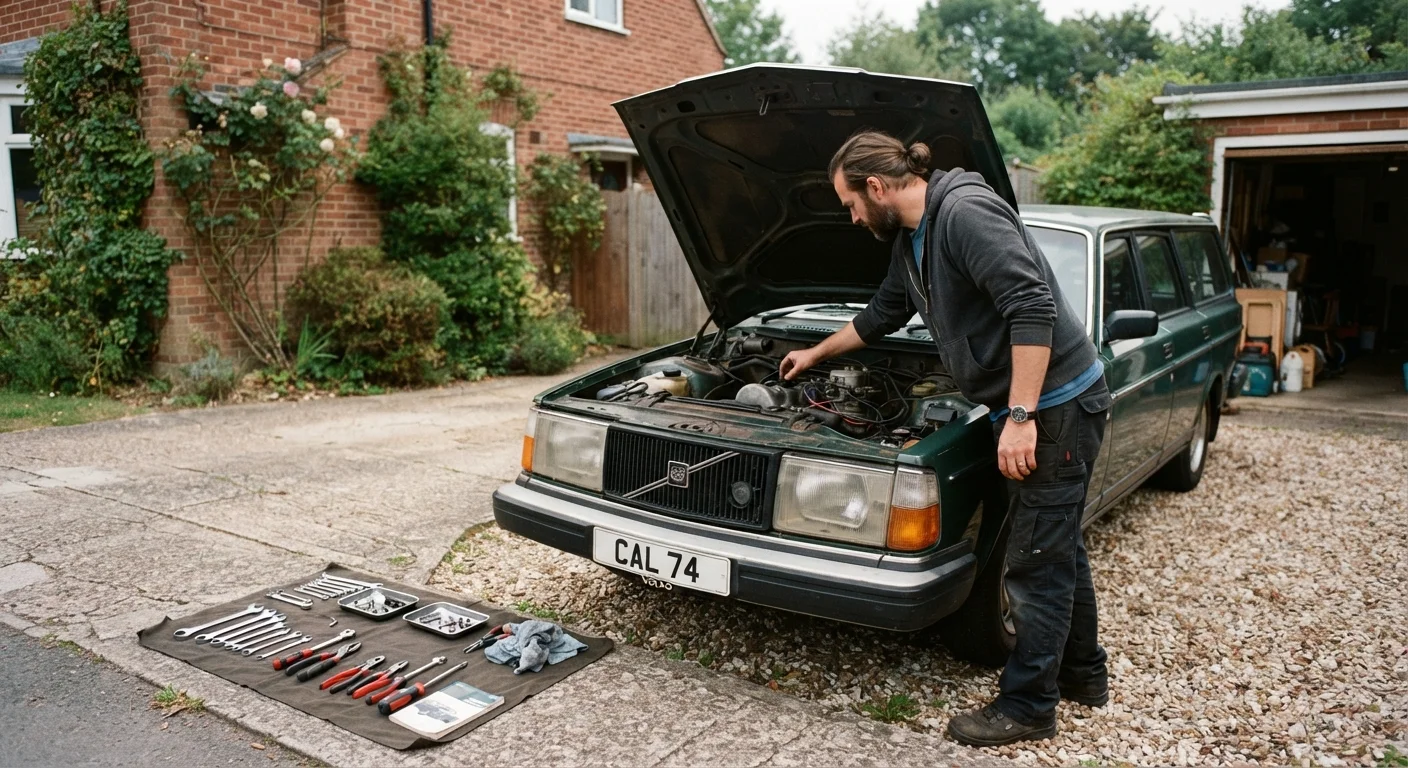
A level, well-lit surface is a basic requirement before starting any under-vehicle work. Soft ground, steep driveways, and wet pavement all affect how safely a vehicle can be supported on jack stands. Some tasks that are mechanically straightforward become genuinely hazardous without a proper flat workspace. If you do not have one, a shop with a lift is the practical solution, not a workaround.
Having the right tools is not optional for many tasks. A drain plug torqued by hand instead of to spec can back out on the highway. Jack stands are not negotiable when working under a vehicle; a floor jack alone is not a safe support. If your workspace is a sloped driveway without adequate lighting or drainage, some jobs that are technically within your skill level are still better done elsewhere.
Think of tool investment honestly. If you plan to change your own oil twice a year, the upfront cost of a proper floor jack, jack stands, an oil drain pan, and a filter wrench is reasonable over time. If you are doing it once to say you did it, a shop visit is more economical and safer.
Knowing when a second opinion makes sense
A shop visit is not the end of the conversation. Getting a written estimate before any work starts, asking what the diagnostic process involves, and understanding what 'recommended' versus 'required' means on a service printout are all reasonable steps. Some services listed as due on mileage charts in the owner's manual have longer real-world intervals depending on driving conditions.
For drivers planning a long drive, a pre-trip check covers the gap between what you monitor weekly and what a technician sees on a lift. The pre-departure checklist covers tires, fluids, visibility, and emergency gear in one pass. That kind of layered approach, owner attention plus periodic professional inspection, gives the most complete picture of a vehicle's condition.