
What the check engine light is actually telling you
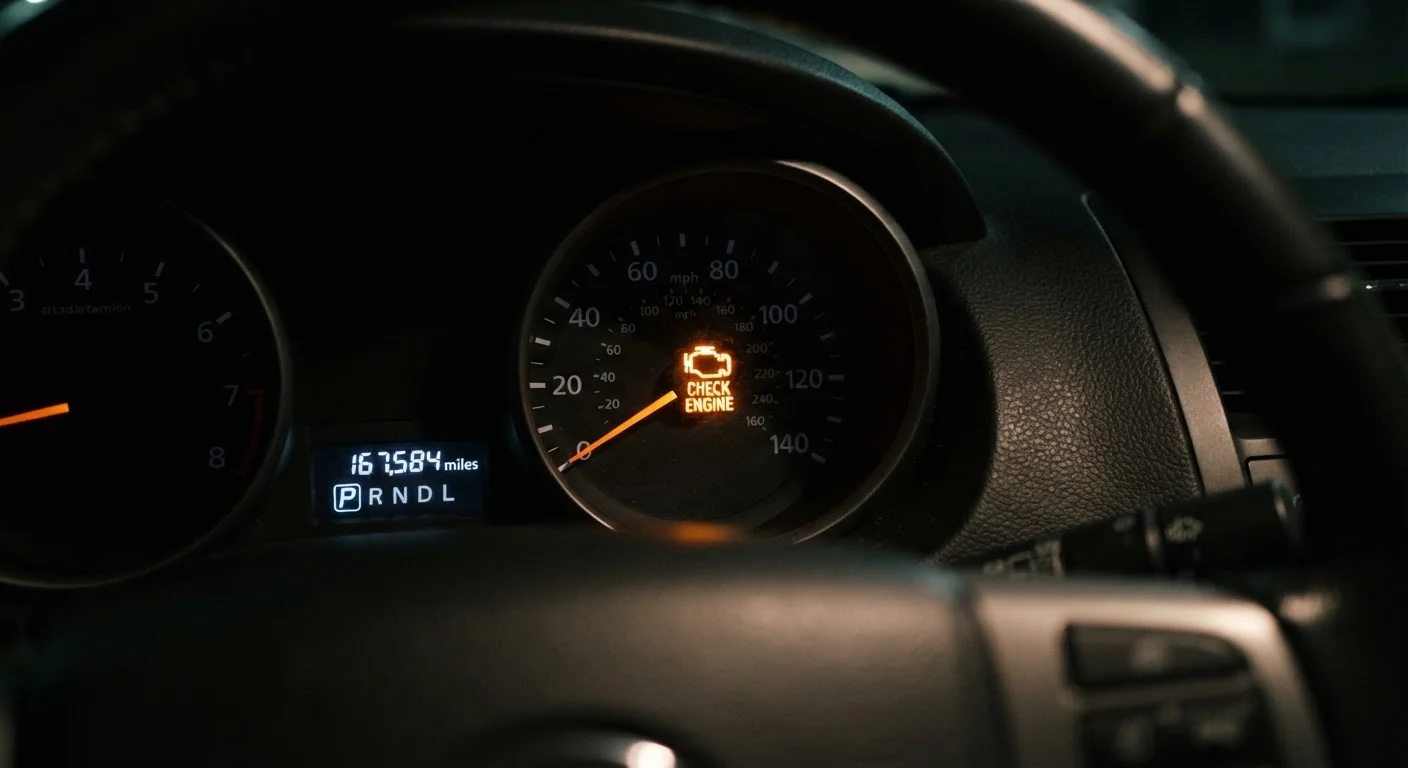
Your car's computer monitors dozens of sensors simultaneously, covering the engine, transmission, and emissions systems. When a sensor reading falls outside an acceptable range, the computer logs a diagnostic trouble code and turns on the malfunction indicator lamp. The light itself carries no detail about which system failed; it is simply a notification that a code exists.
Two states of the light matter. A steady, continuous glow means a fault has been detected, but the situation is not immediately critical. A flashing or blinking light means a severe fault is active right now, most often an engine misfire severe enough to send unburned fuel into the exhaust, which can overheat and destroy a catalytic converter within minutes of driving.
Other dashboard lights can be confused with the check engine light. The oil pressure warning and the temperature warning are separate indicators, and both demand immediate action. The check engine light is specifically tied to the OBD-II diagnostic system and looks like a small engine outline, sometimes with the word "CHECK" below it.
Check your gas cap first
Before calling a mechanic, stop and check that your gas cap is fully seated and tightened. Remove it and reinstall it until you hear or feel it click into place. Drive normally for a few days; if the cap was the trigger, the light may clear on its own without any further action.
Common causes, from simple to serious
The range of possible causes is wide, which is why many drivers feel anxious when the light appears. Most triggers fall into a few categories:
- Gas cap issues: a loose or cracked cap breaks the seal on the evaporative emissions system. Tightening or replacing the cap and driving a few cycles often clears the code.
- Oxygen sensors: these measure exhaust gases to help the engine run efficiently. A failing sensor reduces fuel economy and can damage the catalytic converter over time.
- Spark plugs and ignition coils: worn plugs or a failed coil cause misfires. You may notice rough idling or hesitation during acceleration.
- Catalytic converter: a damaged converter usually means another problem went unaddressed for too long. It is among the more expensive repairs.
- Mass airflow sensor: this sensor measures how much air enters the engine. A faulty reading causes poor performance and elevated emissions.
These are common causes, not an exhaustive list. A diagnostic scan is the only way to know which system actually triggered the code in your specific vehicle.
P0420
One of the most frequently logged OBD-II fault codes in the US
P0420 indicates catalyst system efficiency below threshold, often tied to a failing oxygen sensor or worn catalytic converter.
1996
Year OBD-II became mandatory on all US passenger vehicles
The EPA required all cars sold in the United States from model year 1996 onward to include a standardized OBD-II diagnostic port.
How to respond when the light comes on
The first step is to assess what the car is doing. If performance feels normal and no other warning lights are active, you have time to gather information before calling a mechanic. If you notice rough running, unusual smells, loss of power, or a flashing light, do not continue driving.
Getting the code read is straightforward. Many auto parts retailers offer free OBD-II scans. You can also purchase an inexpensive code reader that connects to the OBD-II port, which is typically located under the dashboard on the driver's side. The code reader displays a trouble code such as P0420 (catalyst efficiency below threshold) or P0300 (random misfire). These codes point to a system, not a specific failed part, so a code alone does not replace a mechanic's diagnosis.
Once you have the code, you have context for a conversation with a qualified technician. Staying on top of scheduled maintenance reduces the likelihood of many of these faults appearing in the first place. See our guide to decoding your car's maintenance schedule for a full breakdown of service intervals and what each one covers.
A driver notices the check engine light came on after stopping for gas. The car seems to run normally.
A driver experiences rough idling and the check engine light is flashing on the highway.
A vehicle with 85,000 miles has a steady check engine light and slightly reduced fuel economy.
When to see a mechanic right away
Some situations do not allow for waiting. Take your vehicle to a qualified mechanic promptly if the check engine light is flashing, if it appears alongside the oil pressure or temperature warning, or if you notice smoke, strong fuel odors, or a sudden change in how the car drives. These combinations can indicate engine damage that worsens with each mile.
A steady check engine light with normal vehicle behavior gives you more flexibility, but scheduling a diagnosis within a few days is reasonable. Delaying for weeks risks a minor problem becoming a larger repair. A professional technician will read the stored code, inspect the relevant system, and confirm the actual failed component before recommending a repair.
Never clear a check engine light by disconnecting the battery without addressing the underlying fault. The code will return, and erasing it also resets the OBD-II readiness monitors, which means your vehicle will likely fail an emissions test until those monitors complete their drive cycles again.