
Why weather changes the physics of driving
Most collisions attributed to bad weather are not caused by the weather itself. They happen because drivers do not adjust their behavior to match changed road conditions. Traction, stopping distance, and visibility are the three variables that shift most dramatically when rain, snow, or fog arrives.
On dry pavement, a properly maintained vehicle traveling at 60 mph needs roughly 270 feet to stop in an emergency. On wet pavement, that figure grows. On packed snow or ice, stopping distance can increase by four times or more. The posted speed limit reflects what is safe for ideal conditions, not for a road covered in standing water or black ice.
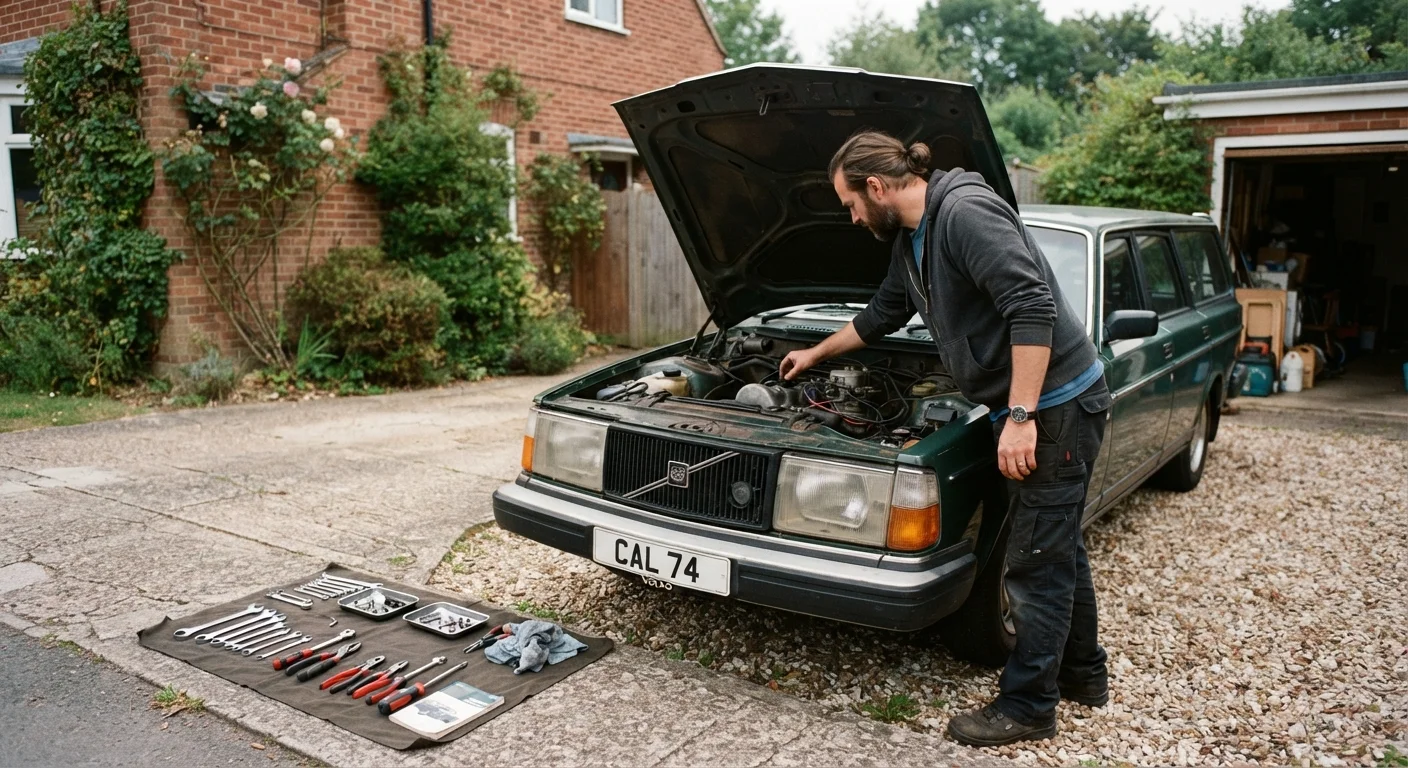
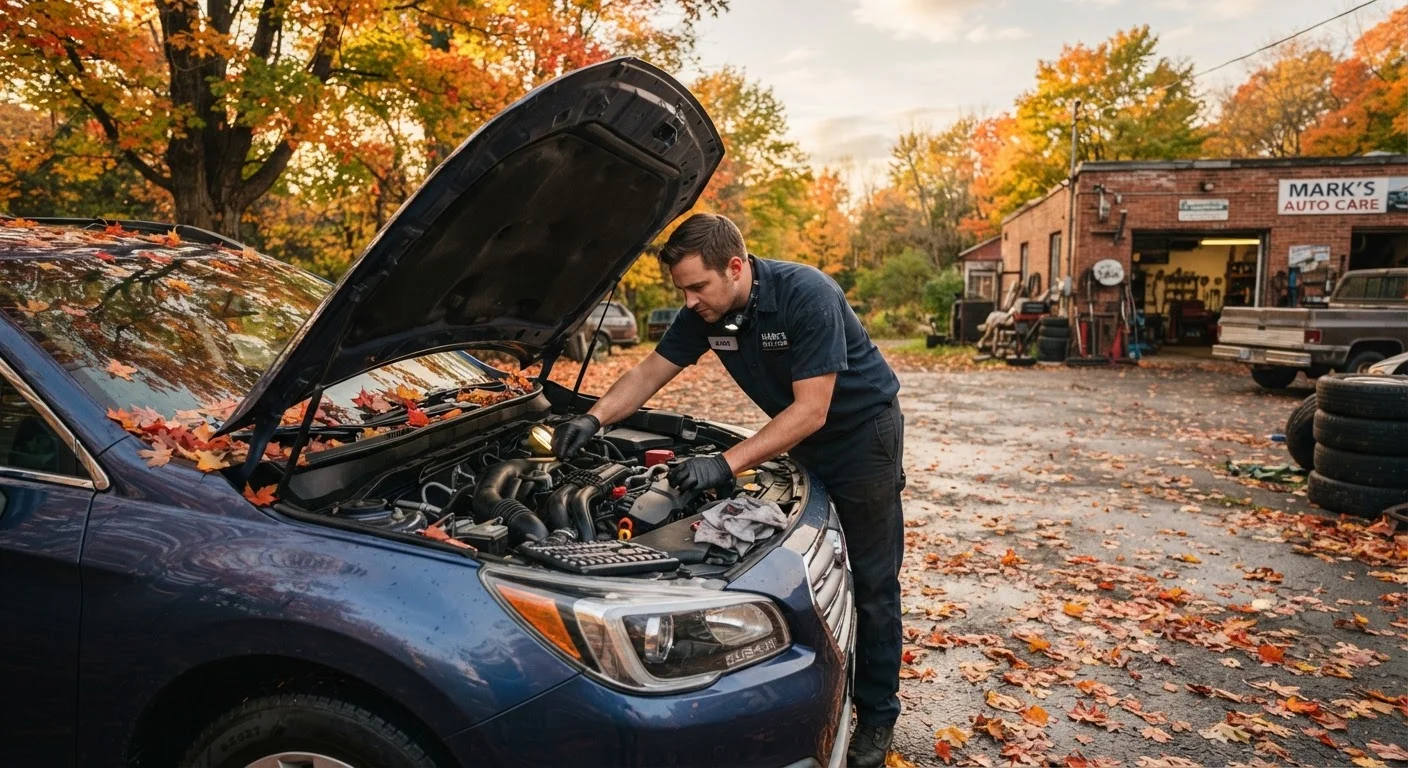
Before any significant weather arrives, your vehicle's condition matters as much as your habits behind the wheel. Tires with adequate tread depth, functional wipers, and properly aimed headlights are baseline requirements. See our seasonal car care checklist for a full pre-season vehicle inspection guide.
Driving in rain
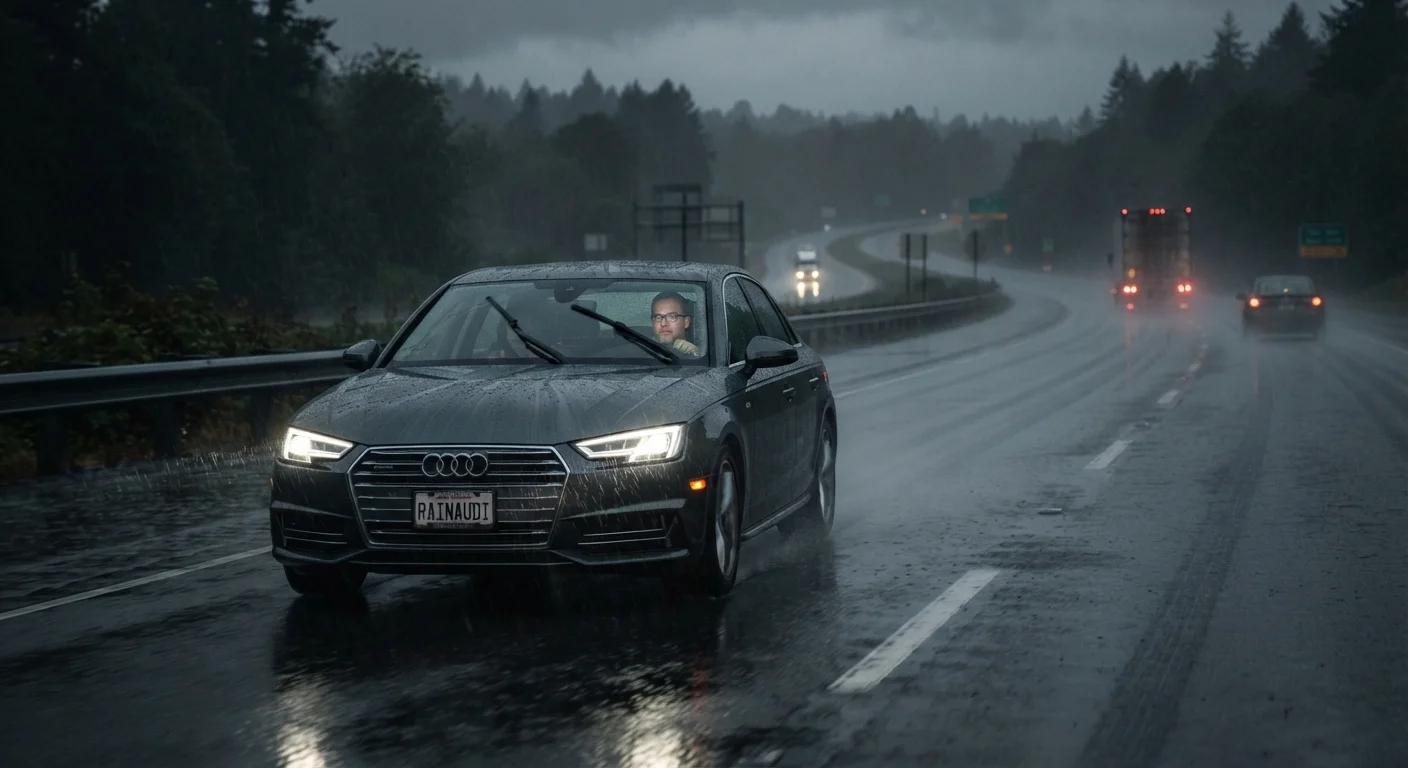
Rain creates two distinct hazards: reduced visibility and reduced traction. The first few minutes of a rainstorm are often the most dangerous, because light rain mixes with road oils to produce a particularly slippery surface before heavier rainfall washes it away.
Turn your headlights on whenever your wipers are running. In most U.S. states, this is required by law, and it makes your vehicle visible to others long before low light would otherwise prompt you to switch them on.
Hydroplaning occurs when a tire rides up on a film of water faster than the tread can channel it away. It typically happens above 35 mph on standing water. If you feel the steering go light or hear the engine rpm suddenly rise without acceleration, you are likely hydroplaning. Ease off the accelerator smoothly, hold the wheel straight, and allow the vehicle to slow until the tires regain contact. Do not brake hard or steer sharply.
Before a long drive in forecast rain or snow, add five minutes to your pre-departure routine to check wiper blade condition and tire pressure. Cold weather drops tire pressure roughly 1 psi for every 10 degrees Fahrenheit of temperature drop, affecting wet-road grip directly.
Tire pressure and wiper condition are two of the most commonly overlooked pre-trip checks, and both have a measurable effect on traction and visibility in poor weather.
If you start to skid on ice or snow, steer in the direction you want the front of the car to go, and ease off both the gas and the brake simultaneously. Overcorrecting the steering is the most common cause of a recoverable skid turning into a spin.
Counter-steering while maintaining calm, steady inputs gives the tires the best chance to regain grip without transferring the skid to the opposite end of the vehicle.
Following distance is the most consistently under-adjusted variable in wet conditions. The three-second rule applies on dry roads; double it in rain.
Driving in snow and ice
Snow and ice require the most significant behavioral shift of any weather condition. The core principle is smoothness: smooth steering, smooth braking, smooth acceleration. Any abrupt input can break traction on a slippery surface.
Accelerate gently from stops to avoid wheelspin. When braking, apply steady, moderate pressure if your vehicle has ABS (anti-lock braking system), and do not pump the pedal, because ABS does that work automatically. Without ABS, threshold braking, applying just enough pressure to stay short of lockup, gives the most control.
Black ice has no visible surface texture. It forms most often on bridges, overpasses, and shaded stretches of road where temperatures drop fastest. If roads look wet but the temperature is at or below freezing, treat every surface as potentially icy.
All-wheel drive helps you accelerate on snow but does little to improve braking or cornering. Drivers of AWD vehicles sometimes overestimate their stopping ability. Tire choice matters more than drivetrain for winter grip. For the vehicle maintenance side of winter preparation, the seasonal car care guide covers tire tread checks and fluid specs.
Driving in fog
Fog reduces visibility in ways that are hard to judge accurately. Drivers tend to feel safer than they are because the immediate surroundings look clear, while hazards ahead are hidden.
Use low-beam headlights, not high beams. High beams scatter light off fog particles and reflect glare directly back at you, reducing how far you can see. If your vehicle has dedicated front fog lights, use them. Rear fog lights, where available, help drivers behind you see your position.
Reduce speed to a level where you can stop within your visible range. This is called driving within your headlight distance, and it is the single most protective adjustment in dense fog. If visibility drops to the point where you cannot see far enough to react safely, find a safe place to pull completely off the road, turn on your hazard lights, and wait.
For a broader look at how reduced visibility at night compares to fog conditions, see our piece on night driving hazards.
Habits that carry across all conditions
A few adjustments apply regardless of whether the hazard is rain, snow, or fog.
- Increase following distance beyond your normal gap. Weather extends stopping distances, and you need time to react before braking even begins.
- Reduce speed. This is the single adjustment that improves outcomes in every adverse condition.
- Eliminate distractions. Divided attention is more dangerous when conditions require active monitoring of the road surface, visibility, and vehicle behavior.
- Communicate your position clearly. Use headlights, turn signals earlier than you normally would, and brake progressively so drivers behind you have time to react.
Defensive driving means anticipating hazards before they develop, not just responding to them. In adverse weather, the gap between a defensive driver and a reactive one is where most weather-related collisions occur. For a deeper look at building durable habits across all driving situations, see the habits that separate safe drivers from lucky ones.