
Why cats scratch and what they are communicating
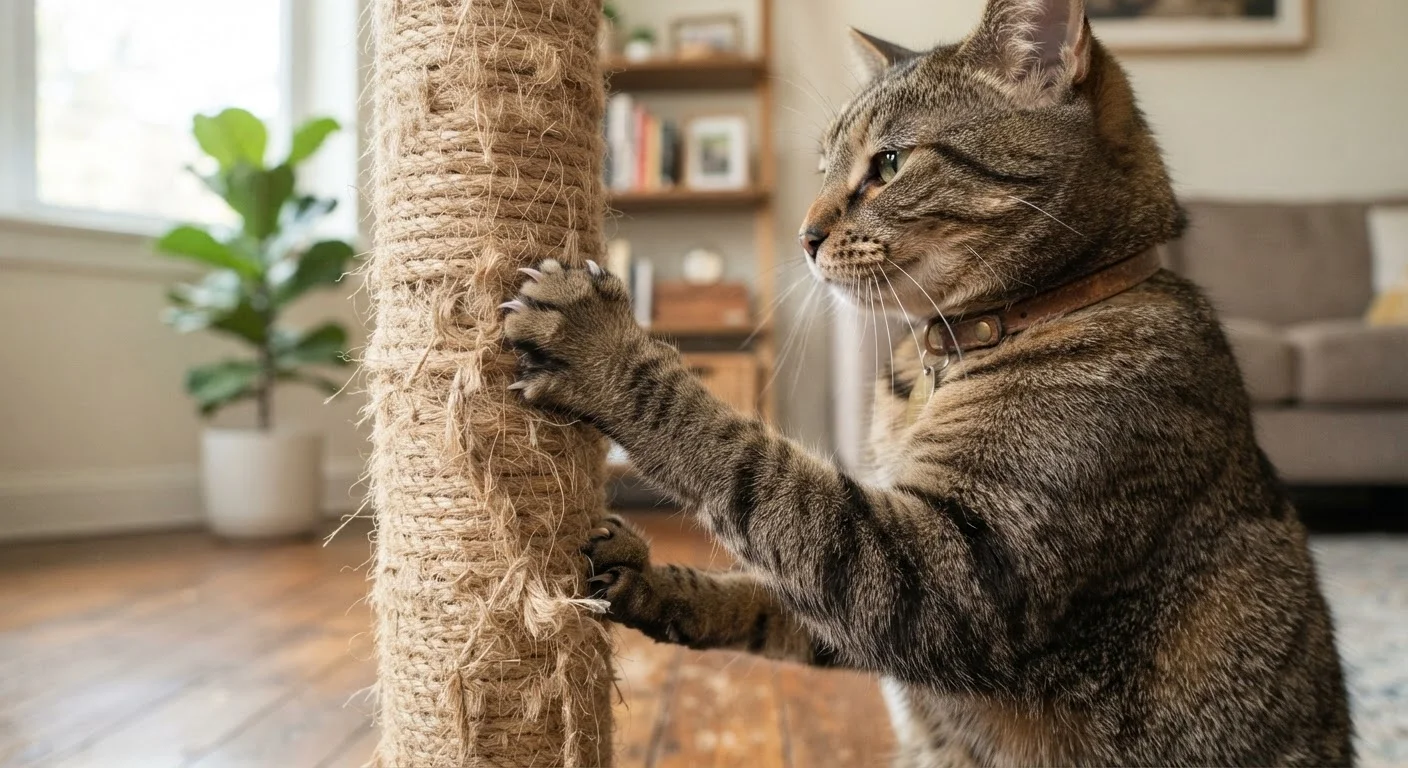
Scratching is not misbehavior. For a cat, it serves several simultaneous purposes: it removes dead outer layers from the claws, stretches the muscles of the back and shoulders, and deposits scent from glands in the paws. The visual mark left on a surface also communicates territorial presence to other cats in the household.
Because scratching meets real physical and communicative needs, you cannot train a cat out of it entirely. The realistic goal is to make certain surfaces more attractive than your couch or doorframe. Understanding what drives the behavior tells you which solutions will actually work.
Scratching frequency often increases during stress, such as a new pet, a move, or a change in routine. If your cat's scratching has increased sharply with no obvious trigger, a brief veterinary visit can rule out claw or skin discomfort. For more on reading what your cat's body signals mean, see our body language field guide.
What makes a scratching surface attractive to cats
Cats are not random about where they scratch. They tend to return to surfaces with specific qualities: vertical orientation, enough height to fully extend the body (typically at least 28 to 32 inches), and a texture that shreds satisfyingly. Sisal rope and corrugated cardboard are the most consistently preferred materials. Carpet-covered posts often attract less interest because the texture is too soft and the fibers do not provide the resistance cats seek.
Location also matters. Cats scratch most heavily near sleeping areas and at room entrances, both of which are communication hotspots. A post placed in a back corner is often ignored, while one placed next to the sofa it has been using will be adopted within days.
Invest in the right post from the start
A post that is too short or too wobbly will be ignored no matter where you place it. Look for a vertical post at least 28 to 32 inches tall with a base wide enough to stay planted under full body weight. Sisal rope wound tightly around the post holds up to repeated use far better than loose fabric or looped carpet.
Stability is non-negotiable. A post that wobbles when a cat leans into it will be abandoned immediately, and the cat may never return to it even after you stabilize it. Before buying, check that the base is wide and heavy enough to hold firm under a full stretch.
How to redirect scratching away from furniture
What you will need
The steps below work for both cats that have just started scratching furniture and those with an established habit. Cats with a long history of using one spot take longer to redirect, but the method is the same.
Identify every surface your cat currently scratches
Walk through your home and note each scratched surface: its orientation (vertical or horizontal), material, and location. This tells you what texture and angle your cat prefers, which determines what kind of post will work best as a substitute.
Choose a post that matches your cat's demonstrated preferences
If your cat scratches vertical surfaces, choose a tall vertical post with sisal rope. If it scratches carpet or rugs horizontally, a flat or angled corrugated cardboard pad is more appropriate. Matching the orientation and texture to what your cat already chooses improves adoption dramatically.
Place the post directly next to the problem surface
Position the new post within a foot of the furniture or wall the cat has been using. This feels counterintuitive, but the cat needs to encounter the post while already in the mood to scratch. Once the cat is reliably using the post, you can move it a few inches per day toward a more convenient location.
Reward the cat each time it uses the post
When your cat scratches the post, offer a small treat or verbal praise immediately. The reward needs to come within a few seconds to connect the behavior to the consequence. Over time, intermittent rewards maintain the preference without requiring constant reinforcement.
Make the original surface less appealing
Apply double-sided tape or aluminum foil to the areas the cat has been scratching. These textures are aversive to most cats without causing any harm. Keep them in place until the post habit is well established, generally two to four weeks of consistent use.
If you have a kitten or are preparing a new home, the guide to setting up a home for a new cat covers where to position posts and other resources before the cat arrives.
When damage has already occurred and what to do about it
Furniture that already carries scratch marks and scent will continue to attract the cat. After placing an alternative post nearby, cover the damaged area temporarily with double-sided tape, aluminum foil, or a commercially available deterrent spray. Cats dislike the tacky texture and most citrus-based scents. Remove the deterrent only after the cat has been reliably using the post for at least two weeks.
Trim your cat's claws every two to three weeks. Blunt tips cause significantly less surface damage and reduce the satisfaction a cat gets from scratching upholstered fabric specifically. This does not eliminate the scratching drive, but it reduces destruction during the transition period.
Synthetic nail caps, applied over each claw, can protect furniture in severe cases. They require reapplication every four to six weeks and some cats tolerate them better than others. A veterinarian or groomer can apply the first set and show you the technique.
Declawing (onychectomy) involves amputating the last bone of each toe and is opposed by the American Association of Feline Practitioners on welfare grounds. It also does not resolve the underlying scratching drive. Most cats that are declawed continue to go through the motions, using stumps against surfaces. For households where scratching damage is serious, behavioral redirection and nail management are the approaches that address the actual problem.
Scratching behavior is closely tied to how stimulated and secure a cat feels indoors. Indoor cats and outdoor cats have different enrichment needs, and increasing environmental complexity for an indoor cat often reduces stress-driven scratching on its own.