
How lifespan and physical health differ
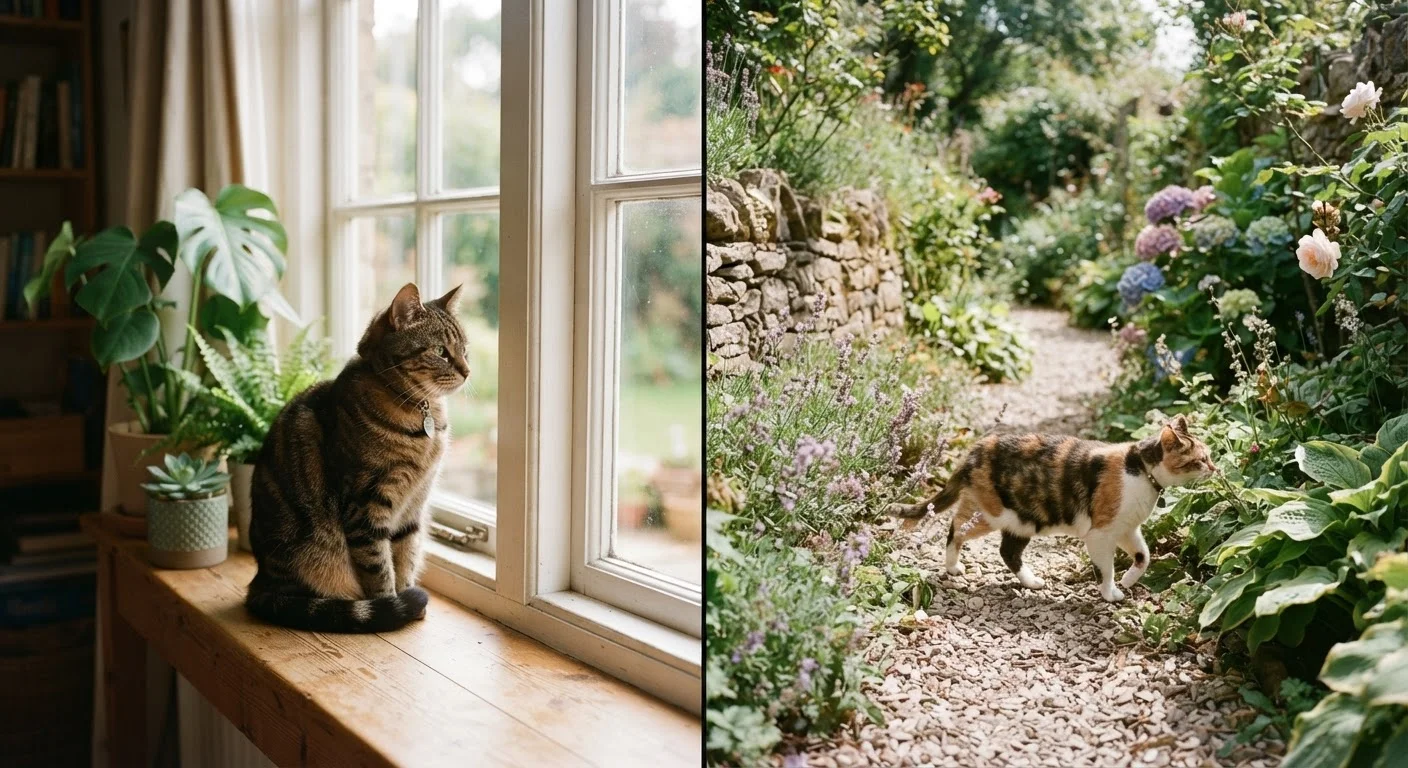
The gap in average lifespan between indoor and outdoor cats is substantial. Indoor cats commonly live 12 to 18 years, while cats with regular outdoor access average closer to 5 to 7 years, according to veterinary epidemiological data. Traffic injuries account for a large share of that difference, but disease exposure adds to it. Outdoor cats contact other animals far more often, which raises their risk of feline leukemia virus (FeLV), feline immunodeficiency virus (FIV), upper respiratory infections, and intestinal parasites.
Outdoor cats also encounter environmental toxins: antifreeze pooling in driveways, rodenticide-poisoned prey, pesticide-treated lawns, and plants that are lethal when ingested. Indoor cats are largely shielded from these hazards, though owners still need to audit their homes for toxic houseplants and household chemicals.
One genuine health advantage outdoor cats tend to have is a lower rate of obesity. More movement across varied terrain burns more calories than a typical indoor routine. Indoor cats benefit from puzzle feeders and interactive play to offset reduced activity. See how wet, dry, and raw diets compare for context on matching calorie density to an indoor cat's actual energy output.
| Criterion | Indoor cat | Outdoor cat |
|---|---|---|
| Average lifespan | 12 to 18 years | 5 to 7 years |
| Traffic injury risk | None | High in urban areas |
| Infectious disease exposure | Low | Higher (FeLV, FIV, parasites) |
| Obesity risk | Higher without enrichment | Lower due to activity |
| Behavioral enrichment | Owner-provided, deliberate | Self-directed, variable |
| Wildlife predation | None | Significant |
| Parasite exposure | Low | Frequent (fleas, ticks, worms) |
| Toxin exposure | Low (audited home) | Higher (outdoor chemicals) |
Behavioral needs and mental stimulation
Cats are predators, and the indoor environment does not automatically satisfy that drive. Without outlets, indoor cats can develop repetitive behaviors, over-groom, or become destructive. Vertical space, scratching surfaces, rotating toys, and food-based puzzles are not optional extras; they directly address behavioral health. Why cats scratch and how to redirect it goes deeper on one of the most common frustration behaviors owners see.
Outdoor cats self-direct much of their enrichment. Hunting sequences, territorial patrolling, and novel sensory input from weather and wildlife all engage their nervous systems. However, the behavioral picture is not uniformly positive outdoors. Territorial disputes with other cats cause bite wounds that abscess easily, and stress from unfamiliar animals can produce anxiety, urine marking, and appetite changes even after a cat returns home.
Reading your cat's emotional state matters in both situations. Decoding your cat's body language helps owners recognize when a cat is understimulated, overstimulated, or in pain, regardless of lifestyle.
Wildlife and community considerations
Free-roaming domestic cats hunt birds and small mammals at a scale that wildlife biologists describe as ecologically significant. A 2013 study published in Nature Communications estimated that free-ranging domestic cats in the United States kill between 1.3 and 4.0 billion birds annually. That figure remains contested, but the directional finding, that outdoor cats do kill wildlife in large numbers, is broadly accepted across the ecological research community.
This is not only an ethical question. Some municipalities have ordinances restricting free-roaming cats, and neighbors who feed local wildlife may be directly affected. Owners considering outdoor access should factor this into the decision rather than treating it as a secondary concern.
Enclosures, often called catios, and supervised leash outings give cats outdoor exposure while effectively eliminating predation. For owners setting up an indoor environment from scratch, what to arrange before bringing a cat home covers spatial design choices that support this kind of structured access.
Making a decision that fits your cat
No single answer suits every cat. A confident, high-energy, 3-year-old cat living in a quiet rural area is a different case from a timid, senior cat in a dense urban neighborhood. The decision should weigh the specific animal's temperament, prior experience, and health status against the actual risk profile of the local environment.
Cats that have always lived indoors generally adapt well and do not experience unsatisfied longing for outdoors they have never known. Cats that have had outdoor access often find the transition to indoor-only genuinely stressful and may require a longer, more deliberate adjustment period with additional enrichment.
Veterinarians generally recommend indoor living as the default, with structured outdoor access such as a catio or harness training as an evidence-based compromise. That recommendation reflects the lifespan and disease data, not a judgment about what is natural. A shortened life spent outdoors is not inherently more fulfilling than a long, well-enriched indoor one.
This article is for general informational purposes only and is not a substitute for personalized veterinary advice. Consult a licensed veterinarian regarding your cat's specific health, behavior, and housing needs.