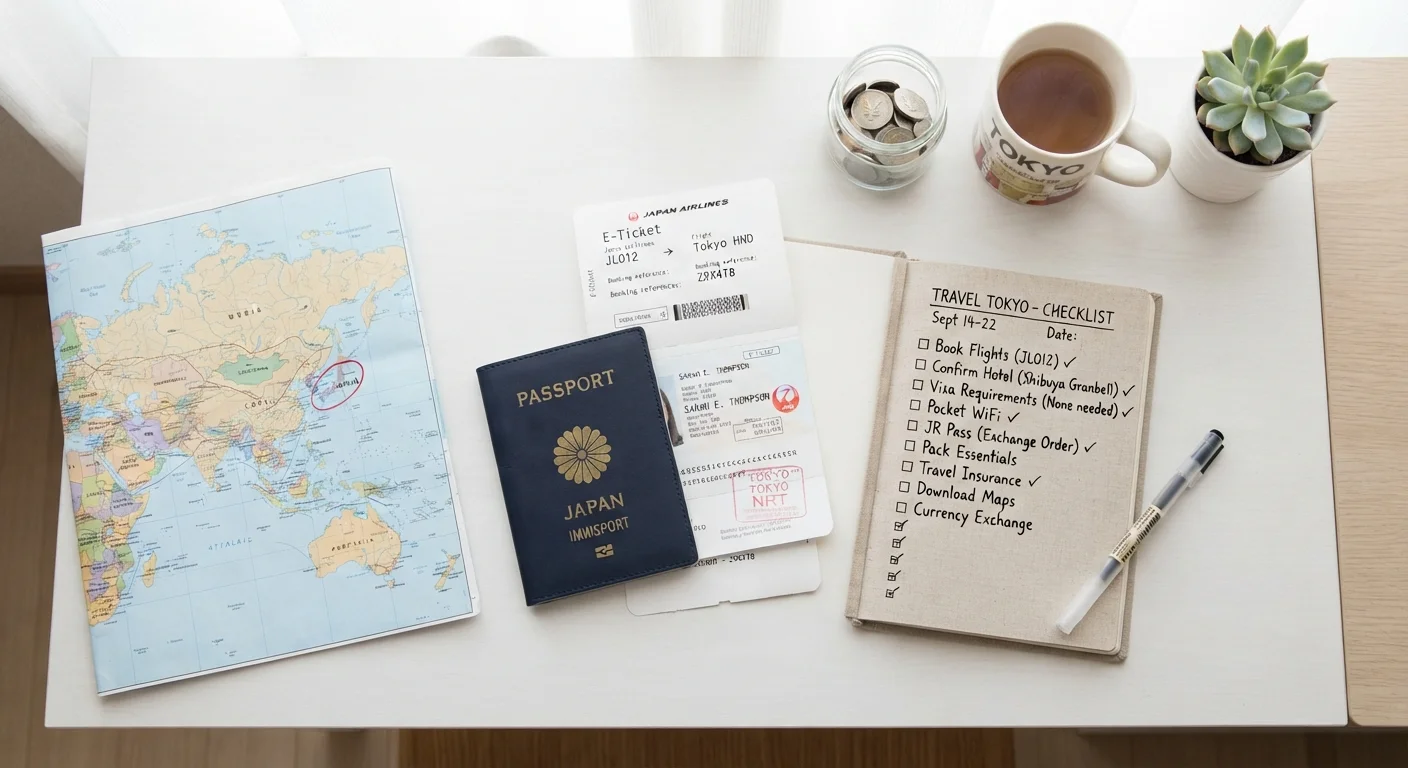


Start with a clear travel goal
Most trip-planning problems start at step zero: people choose a destination before they decide what kind of trip they actually want. A beach town booked for relaxation can feel deeply frustrating to a traveler who wanted cultural immersion, and vice versa. Before you open any booking site, write one sentence describing what you want to feel or accomplish by the end of the trip.
That sentence does real work. It filters destinations, sets expectations for your travel companions, and tells you how much structure your itinerary needs. A recovery trip after a demanding work stretch calls for fewer activities per day than an anniversary trip with a long list of shared interests to explore. See how itinerary planning compares to spontaneous travel if you are still deciding how much to schedule.
Write down your non-negotiables too: travel party size, maximum travel time, accessibility requirements, and any firm dates. These constraints narrow the field quickly and save hours of research on options that were never realistic.
Set and protect your budget
A travel budget has five line items: transportation, accommodation, food, activities, and a contingency fund. Most travelers budget the first two carefully and then discover the last three consume far more than expected. A realistic rule of thumb is to estimate your daily food and activity costs, then add 20 percent as a buffer before you finalize anything.
Separate your budget into pre-trip spending (flights, hotels, tours you book in advance) and on-trip spending (meals, ground transit, incidentals). Tracking these separately prevents the common mistake of treating pre-paid costs as already "handled" and then overspending in the field. For a deeper look at where vacation budgets quietly lose money, see where your vacation budget leaks.
If your total budget is genuinely tight, a step-by-step approach to budget travel planning covers how to sequence your bookings to get the most flexibility from a limited spending pool. For general spending-tracking methods that translate well to travel, the budgeting basics hub has practical frameworks.
Open a dedicated savings account or use a separate debit card loaded with your travel budget before your trip. Spending from a single, capped source makes it much harder to accidentally exceed your budget during the trip.
Behavioral research consistently shows that earmarked funds are harder to overspend than money pooled with everyday accounts, because the mental separation creates a natural spending boundary.
When estimating meal costs, use the cost of a sit-down lunch at a mid-range local restaurant as your daily food baseline, then multiply by the number of days. This single number catches most food-budget shortfalls before they happen.
Travelers most often underestimate food costs by anchoring on grocery prices or fast food, neither of which reflects the actual mix of meals eaten during leisure travel.
Choose your destination and dates
Once you have a goal and a budget range, match them against destinations. Consider three factors: seasonal conditions, travel time from your home city, and entry requirements. A destination that looks affordable can become expensive when the only available flights involve two connections and an overnight layover.
Shoulder season travel (the weeks just before or after peak season) generally offers lower accommodation costs and smaller crowds without the weather risk of traveling fully off-season. The specific shoulder window varies by destination, so research it per location rather than applying a single rule everywhere.
Americans planning international travel should verify passport validity well before booking. Many countries require at least six months of validity beyond your return date, and passport processing times through the U.S. State Department can run eight to eleven weeks or longer during busy periods. For a full pre-booking document checklist, see the pre-trip planning checklist.
Book in the right order
Booking order matters more than most travelers realize. The standard sequence that tends to produce the best results: confirm your dates and destination, then book flights, then book accommodation, then book any high-demand activities or tours that require advance reservations.
Flights first because accommodation flexibility depends on knowing your arrival and departure windows. Accommodation second because the right hotel or rental can reduce your ground transportation costs significantly, a factor that only becomes visible once your flights are set. Activities last because most can be adjusted or canceled, while flights and refundable accommodations carry more fixed costs if your plans shift.
If your trip is domestic, the order is similar but the stakes on timing are lower. Road trips add a fuel and lodging cost calculation that varies with your route, so map your stops before booking individual nights.
Build a workable itinerary
An itinerary is not a minute-by-minute schedule. It is a list of what you want to do, roughly sequenced by day, with enough buffer built in so that a delayed train or a longer-than-expected museum visit does not cascade into a ruined afternoon.
A practical method: list every activity you want to do, estimate the realistic time each requires (including travel between locations), then assign them to days with no more than two or three anchored commitments per day. Leave at least one half-day unscheduled per three-day block. Travelers who plan every hour routinely report higher stress and lower satisfaction than those who leave gaps. For more on how this balance works in practice, see why travel plans fall apart and how to fix them.
Group activities by neighborhood or area to cut transit time. Crossing a city twice in one day to visit attractions you could have seen back-to-back is one of the most common and avoidable itinerary inefficiencies.
Handle documents, insurance, and logistics
Two weeks before departure, complete a logistics review. Confirm all bookings, download offline maps and any necessary apps, notify your bank of travel dates, and make digital and physical copies of your passport, insurance cards, and confirmation numbers.
Travel insurance is worth understanding before you decide whether to purchase it. Standard policies generally cover trip cancellation, medical emergencies abroad, and lost or delayed luggage, but coverage terms vary widely. Read what is and is not covered before assuming a policy fits your needs. For international trips, your domestic health insurance may provide little or no coverage abroad; verify this with your insurer directly.
For first-time international travelers, planning your first international trip from the US covers currency, safety preparation, and cultural logistics in detail. Once your documents are in order, the final step before departure is packing: principles for packing smarter for any destination walks through how to pack efficiently without overpaying for checked bags.
Always verify current visa requirements, entry rules, and travel advisories through official U.S. government sources before traveling. Conditions change, and no third-party guide can substitute for that verification.
This article is for general informational purposes only. Travel conditions, entry requirements, and costs vary and change frequently. Verify all details with official government sources and your service providers before making any bookings or travel decisions.