
Why distracted driving beliefs matter
Most drivers consider themselves attentive behind the wheel. The problem is that the beliefs shaping that confidence are often wrong, and wrong beliefs produce dangerous decisions. Distracted driving contributed to tens of thousands of crashes in the United States each year according to National Highway Traffic Safety Administration (NHTSA) data, yet surveys consistently show drivers underestimate their own impairment.
Correcting these misconceptions is not about assigning blame. It is about closing the gap between what drivers believe they can do safely and what the research shows they actually can. Safe driving habits depend on accurate self-assessment, and that starts with getting the facts right.
Myth
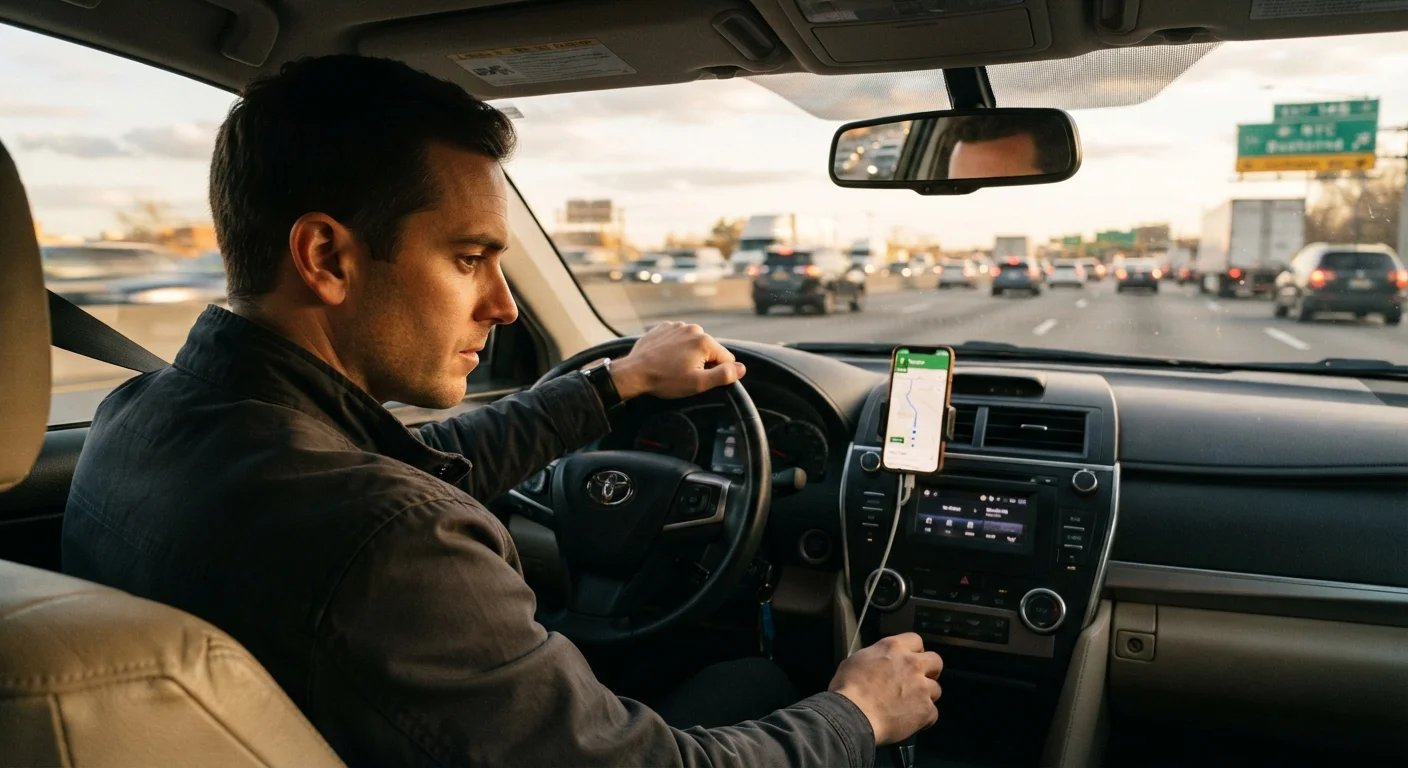
Hands-free phone calls are safe because my hands stay on the wheel.
Fact
Hands-free calls produce the same cognitive impairment as handheld calls, according to research published by the AAA Foundation for Traffic Safety.
The danger of phone use while driving is not primarily physical: it is mental. Holding a conversation requires the brain to construct meaning, formulate responses, and track a social exchange while simultaneously processing a dynamic environment. That cognitive demand does not disappear when you switch to a Bluetooth earpiece or a car's built-in system. The AAA Foundation's research found that hands-free calling impairs reaction time, narrows the field of vision drivers actively process, and causes them to miss visual cues they look directly at. The physical freedom of both hands on the wheel does not restore the attention the conversation consumes.
Myth
Experienced drivers can handle more distraction because they know how to drive automatically.
Fact
Experience reduces conscious effort on routine tasks but does not free up cognitive capacity for a separate demanding activity like a phone conversation.
Driving does become more automatic with experience, which is why a veteran driver does not have to think about steering mechanics. However, automatic processing handles routine conditions, not hazards. A child stepping off a curb, a tire blowout, or a vehicle cutting lanes all require immediate, deliberate attention. At the moment a distraction absorbs that deliberate attention, the driver's ability to respond to sudden hazards drops sharply regardless of how many years they have held a license. Experience lowers the floor of distraction risk; it does not remove the ceiling.
Myth
A quick two-second glance at my phone is harmless.
Fact
At 55 mph, two seconds of eyes off the road means traveling roughly 160 feet without monitoring the environment, a distance in which many hazards can appear.
NHTSA has documented that taking your eyes off the road for just two seconds doubles crash risk. The problem compounds at highway speeds: 55 mph translates to about 80 feet per second. A two-second glance covers more than half a football field. At that distance, a stationary object, a braking vehicle, or a merging truck can go from a manageable situation to an unavoidable one. The glance feels instantaneous because it is, but the physics of the road do not pause while attention is diverted.
Myth
Multitasking is a real skill, and some people are genuinely good at it while driving.
Fact
The brain does not process two demanding tasks simultaneously; it switches between them rapidly, and each switch carries a cost.
What feels like multitasking is task-switching, a process where the brain alternates focus rather than dividing it. Research from cognitive psychology has shown that each switch introduces a lag, sometimes called an "attention residue," where part of the brain remains engaged with the previous task. For driving, this means the driver processing a phone conversation is never fully present on the road, even in the fractions of a second when they feel they are. Studies have found no meaningful group of people who are genuinely immune to this effect, despite common self-reports to the contrary.
Myth
It is fine to check messages at a red light because the car is stopped.
Fact
Phone use at a red light degrades situational awareness and slows reaction time at the moment the light changes, when quick responses matter most.
A red light is not a break from driving. Drivers need to monitor cross-traffic, pedestrians, cyclists, and the light itself, and they must be ready to respond the instant conditions change. Research published in transportation safety literature has found that drivers who use phones at red lights take significantly longer to accelerate when the signal changes and are more likely to miss cues from surrounding traffic. Beyond the immediate intersection, the cognitive state from a phone conversation or text thread persists after the light turns green, meaning the impairment carries into active driving. A stopped car is still a vehicle in traffic, not a parked one.
The limits drivers do not see in themselves
A recurring theme across all these myths is that drivers overestimate their own capacity. Familiarity with a route, years of experience, and a clean record all feel like evidence of competence, and they are to a point. But none of them make the brain immune to cognitive overload or delayed reaction time.
Defensive driving depends on scanning the road ahead, processing what you see, and leaving time to respond. Every form of distraction, whether manual, visual, or cognitive, shortens that window. Understanding the actual mechanism of distraction, rather than relying on intuition, is what separates drivers who manage risk from those who simply get lucky.
3,308
U.S. distraction-related traffic fatalities in one year
According to NHTSA data, 3,308 people were killed in distraction-affected crashes in a single reporting year, representing a persistent and preventable share of road deaths.
2x
Increased crash risk from a 2-second phone glance
NHTSA research found that taking your eyes off the road for two seconds doubles the likelihood of a crash or near-crash event.
27x
Higher crash risk when texting while driving
The Virginia Tech Transportation Institute found that texting while driving increases crash risk by approximately 27 times compared to undistracted driving.
This article is for informational purposes only. For guidance specific to your local traffic laws and safe driving regulations, consult your state's department of motor vehicles or a certified driver safety program.