
What makes highway merging difficult
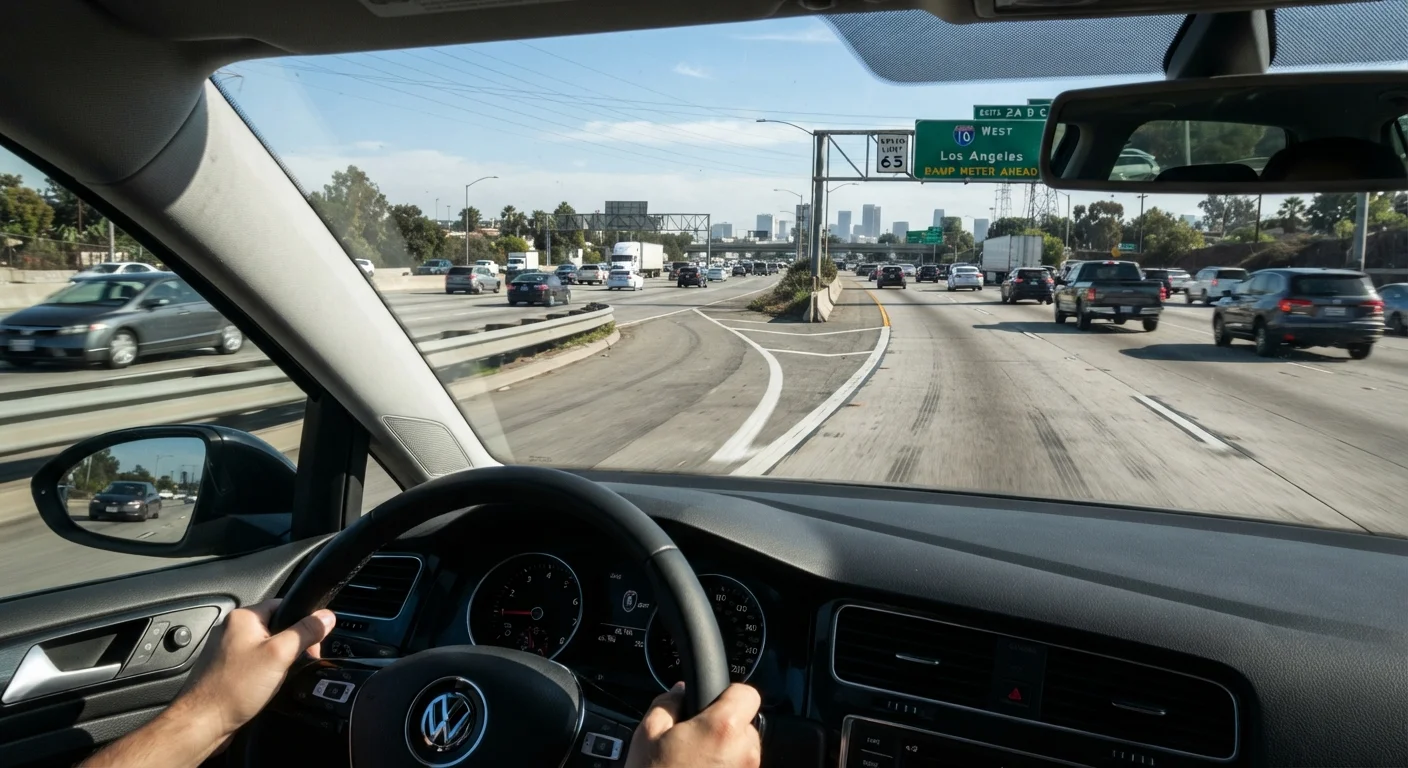
Merging onto a highway compresses several driving tasks into a short window: reading traffic speed, selecting a gap, accelerating to match pace, signaling, checking mirrors and blind spots, and steering laterally. Any one of those steps done poorly or out of sequence can create a conflict at 65 mph.
The on-ramp is not a waiting area. It is a speed-building corridor that gives drivers the distance needed to reach highway pace before the lane is shared. When that function is ignored, the merge becomes adversarial rather than cooperative.
Safe driving habits built over years tend to reduce these moments of conflict, because experienced drivers read the on-ramp situation earlier and commit to a plan before options narrow. The mistakes below are the specific points where that process most commonly breaks down.
The most common merging mistakes and how to correct them
Each error in the list below can occur independently, but they often stack. A driver who slows on the ramp also tends to signal late and check mirrors without looking over the shoulder, compounding the risk with every second.
Entering the on-ramp at too low a speed and failing to accelerate to highway pace before the merge point.
Why it happens: Drivers who feel anxious about merging tend to slow down rather than speed up, mistaking hesitation for caution.
Stopping completely at the end of the on-ramp and waiting for a gap to appear.
Why it happens: When traffic looks dense, stopping can feel like the safe choice, but it eliminates the driver's ability to merge with flow.
Failing to signal before beginning the lateral move into the travel lane.
Why it happens: On a dedicated on-ramp, some drivers assume the intent to merge is obvious, so they skip the turn signal.
Merging without checking the blind spot, relying on mirrors alone.
Why it happens: Mirror-checking feels thorough, but standard side mirrors do not cover the full area alongside the rear quarter of the vehicle.
Cutting short into the travel lane at the beginning of the on-ramp instead of using the full ramp length to build speed.
Why it happens: Drivers who spot an early gap sometimes merge immediately to "lock in" the space, before they have matched traffic speed.
Merging in poor weather adds another layer of difficulty. Speed judgment and gap selection become harder when rain reduces visibility or wet pavement extends stopping distances. The guide to driving in adverse conditions covers how to adjust your approach when conditions change.
What smooth merging actually looks like
Stopping on an on-ramp is dangerous
Coming to a complete stop at the end of an on-ramp is one of the most hazardous things a driver can do. It forces vehicles already on the highway to brake or swerve at speed, with little warning. If traffic is heavy, use the full length of the ramp to find a gap and maintain forward momentum rather than stopping and waiting.
A well-executed merge follows a consistent sequence. While still on the ramp, the driver scans highway traffic and identifies a gap roughly three seconds long at current traffic speed. Acceleration begins immediately so that speed matches the gap's pace before the merge point. The turn signal goes on well before the lateral movement starts. A mirror check and shoulder glance confirm the gap is clear. The steering input is gradual, not sharp, and the driver settles into the travel lane without requiring the following vehicle to brake.
That sequence takes practice to make automatic, but the individual steps are straightforward. The friction most drivers experience comes from attempting the steps out of order or skipping mirror checks to save time under pressure.
Building consistent pre-drive habits, such as adjusting mirrors before pulling out rather than after, reduces how much cognitive load the merge itself demands. Vehicle readiness matters here too: mirrors that are misaligned or dirty increase blind-spot risk before the driver even reaches the highway.