
How to think about the DIY vs. pro decision
A bathroom remodel sits in an awkward middle ground. Some tasks look intimidating but are genuinely approachable. Others look routine but touch systems where an error can cause water damage, fire risk, or a failed inspection that complicates a future home sale. The right framework is not about confidence; it is about the real consequences of getting something wrong.
Two questions help sort any task. First, does the work require opening walls or connecting to electrical circuits, gas, or the main plumbing stack? If yes, local building codes typically require a permit and a licensed trade in most U.S. jurisdictions. Second, what happens if something goes wrong? A crooked tile is fixable. A wiring error behind a wet wall is not.
Planning your first home improvement project covers the permit and budget process in detail, which is worth reading before you commit to a scope.
Tasks that are safe to DIY
Cosmetic and surface-level work is where most homeowners can contribute real labor savings without legal or safety exposure.
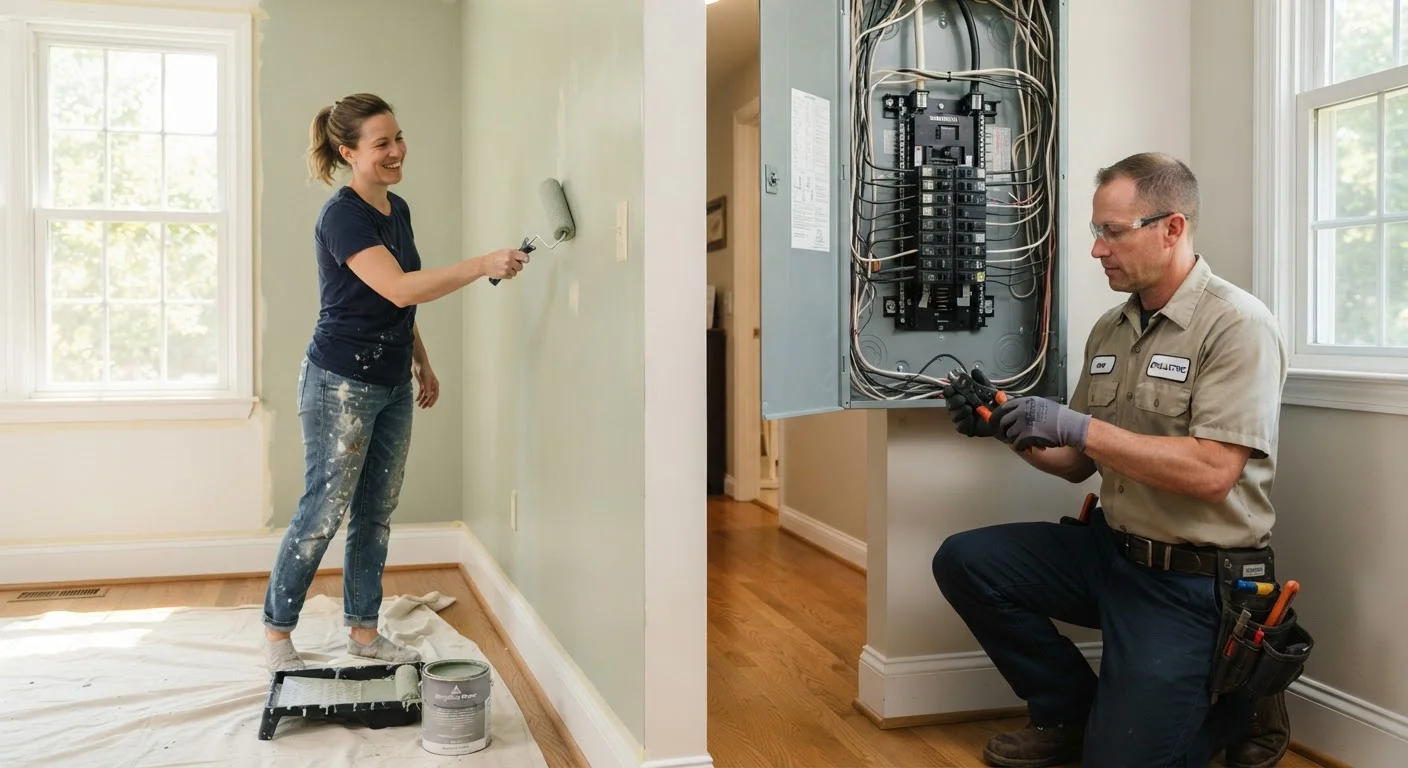
- Painting: bathroom-grade paint with mold-resistant properties is widely available, and prep work (cleaning, taping, priming) is straightforward.
- Hardware and fixture swaps: replacing towel bars, toilet paper holders, a showerhead, or a faucet that uses the same connections as the old one requires basic tools and a careful hand with shutoff valves.
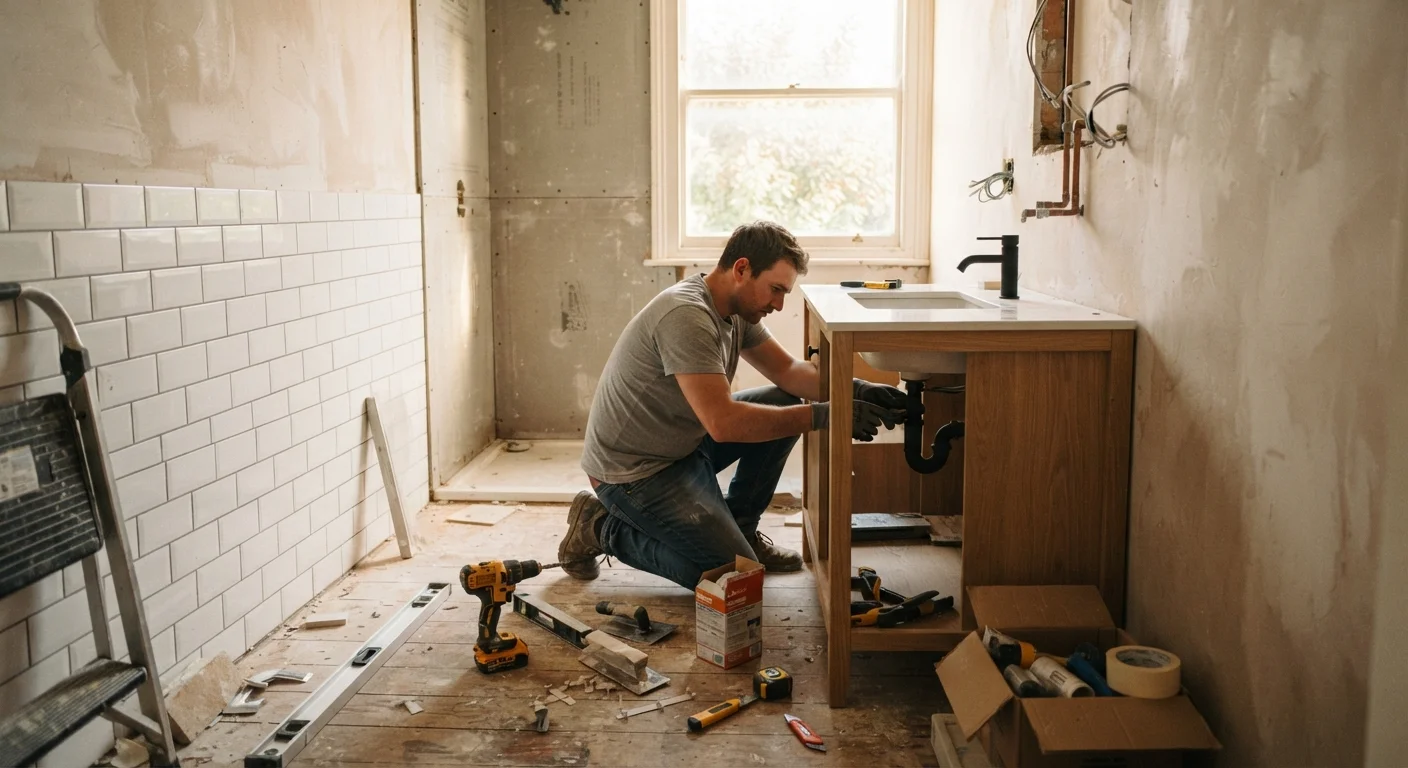
- Vanity replacement: swapping a vanity for one of the same size avoids plumbing relocation. If drain and supply connections are accessible and in good condition, many homeowners complete this in a weekend.
- Tile installation: floor or wall tile that does not require moving plumbing or electrical is DIY-accessible with proper substrate prep, a good tile saw rental, and patience on layout. Waterproofing the substrate correctly matters more than the tile itself.
- Mirror and medicine cabinet installs: surface-mounted versions require only wall anchors. Recessed cabinets that go between studs are manageable as long as you confirm there are no hidden wires or pipes before cutting.
- Caulking and grout repair: a maintenance task every homeowner should know, covered in more depth through routine plumbing upkeep guidance.
| Task | DIY | Licensed pro | |
|---|---|---|---|
| Painting | Yes, low risk | Not needed | |
| Faucet or showerhead swap | Yes, same connections | Not typically needed | |
| Vanity replacement (same size) | Yes, with care | Optional for plumbing | |
| Tile installation | Yes, with proper prep | Recommended for shower pans | |
| Electrical circuits (GFCI, lighting) | No, permit required | Required in most states | |
| Plumbing relocation or new fixture | No, permit required | Required in most states | |
| Structural wall changes | Not recommended | Required |
Work that requires a licensed professional
Several categories of bathroom work are regulated, hazardous, or both. In most U.S. states, doing this work without a license voids homeowner's insurance coverage for related damage and can create disclosure problems when you sell.
Electrical circuits: GFCI outlets near water are required by the National Electrical Code, and adding or moving circuits requires a permit. A licensed electrician ensures code compliance and safe connections in a wet environment.
Plumbing connections to supply lines or the drain-waste-vent stack: replacing a faucet cartridge is one thing. Re-routing drain lines, moving a toilet flange, or adding a wet wall for a new fixture requires permits and, in most jurisdictions, a licensed plumber. Knowing where the line is on DIY repairs outlines this distinction broadly.
Structural changes: removing or altering a wall, even a non-load-bearing one in a bathroom, can hide surprises like mold, outdated wiring, or inadequate blocking. A contractor scopes this correctly from the start.
Shower pan and waterproofing systems in tile showers: a failed shower pan liner behind tile is one of the costliest failures in a bathroom remodel. While some experienced DIYers tackle this, the margin for error is narrow and the consequences (structural rot, mold) are significant. The room-by-room readiness checklist can help you assess what you are actually walking into before demolition.
Permits and inspections: what to know before you start
Permit requirements vary by municipality, so always check with your local building department before starting work. As a general rule, any project that moves or adds plumbing fixtures, adds electrical circuits, or changes the layout of a bathroom requires a permit in most U.S. cities and counties.
Unpermitted work carries two practical risks. Inspectors can require you to open finished walls for inspection after the fact. And when you sell, unpermitted improvements must typically be disclosed, which can affect your sale price or require remediation. The cost of pulling a permit is almost always less than the cost of correcting unpermitted work later.
If you are managing a mixed project where you do some tasks yourself and hire trades for others, coordinate the sequence carefully. Tile should not go up over a shower area before a plumbing rough-in inspection passes, for example. A general contractor can manage this sequencing, or you can do it yourself with careful scheduling.
This article is for general informational purposes only. Local codes, permit requirements, and licensing rules vary. Consult your local building department and, where appropriate, a licensed contractor or plumber before beginning any renovation work.